
Some mornings, I want a proper breakfast, but I absolutely do not want to spend half an hour standing over the stove. That is how these easy low carb breakfast recipes became regulars in my kitchen.
I started experimenting on busy mornings when toast and cereal felt a little too predictable. I wanted something filling, flavorful, and easy enough to make while still half-awake. After plenty of scrambled eggs, overflowing omelets, and one memorable batch of burnt breakfast sausage, I finally figured out which recipes actually deserve a spot in the weekly rotation.
My favorite thing about low carb breakfasts? You don’t need complicated ingredients or fancy cooking techniques. Eggs, cheese, vegetables, Greek yogurt, avocado, sausage, and a few seasonings can turn into surprisingly good meals.
And yes, I’ve learned a few lessons the messy way. For example, spinach looks innocent until you toss an entire handful into an omelet and suddenly realize it has enough water to create breakfast soup. Now I always cook it down first.
These recipes keep things simple, satisfying, and realistic for an ordinary kitchen.
Why You’ll Love These Easy Low Carb Breakfast Recipes

- They’re quick: Most options take about 10–20 minutes.
- They’re beginner-friendly: You don’t need professional cooking skills.
- They’re flexible: Swap vegetables, cheese, herbs, or protein based on what you have.
- They’re meal-prep friendly: Several recipes keep well in the refrigerator.
- They’re actually tasty: No sad plate of plain scrambled eggs here.
The biggest advantage comes from variety. You can make a cheesy egg skillet one morning, a breakfast casserole the next, and something cool and creamy like Greek yogurt with berries when you don’t feel like cooking.
Ingredients List
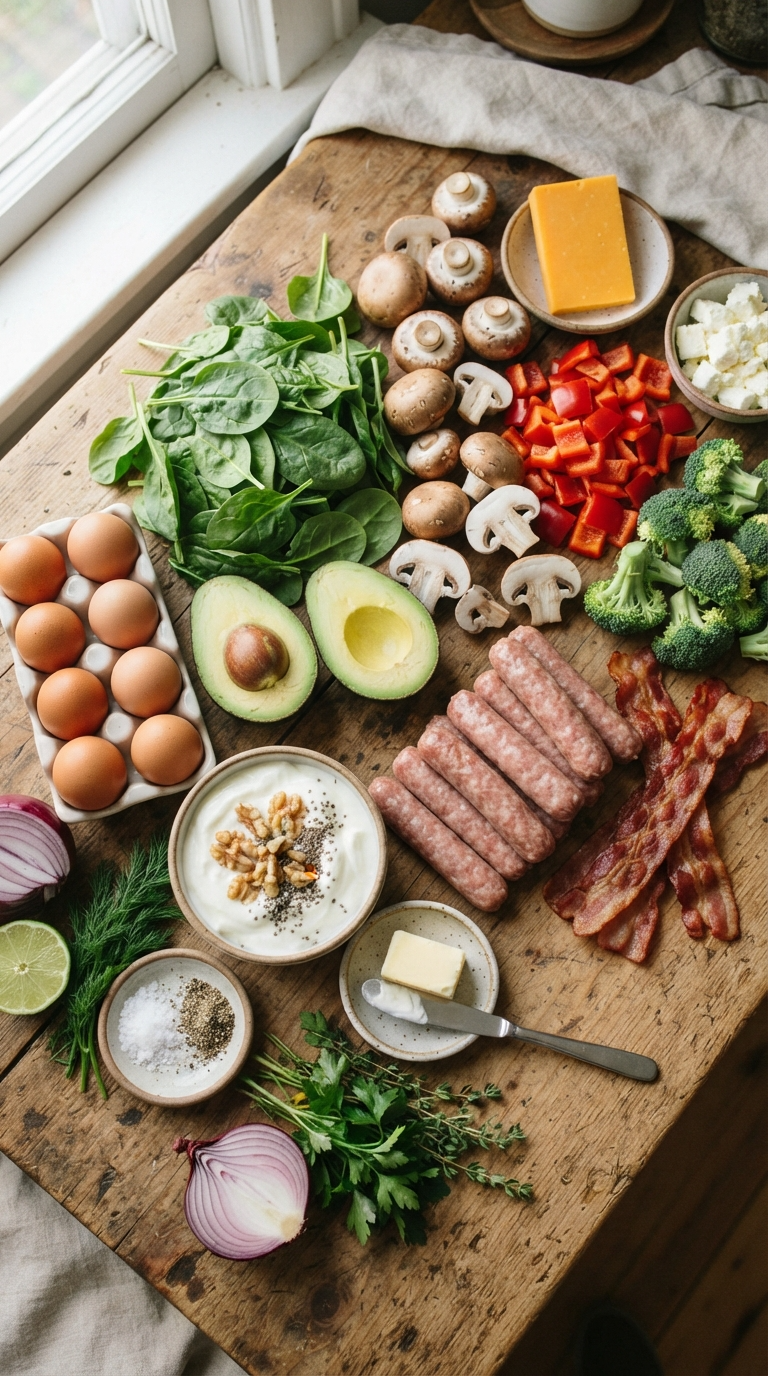
You don’t need to buy an entire specialty grocery store to make these breakfasts. I usually build my shopping list around a handful of versatile ingredients.
Eggs and Dairy
- 8 large eggs
- 1/2 cup shredded cheddar cheese
- 1/4 cup crumbled feta cheese
- 1/2 cup plain unsweetened Greek yogurt
- 2 tablespoons cream cheese
- 2 tablespoons milk or unsweetened almond milk
- 1 tablespoon butter
You can use mozzarella, Monterey Jack, or Swiss cheese instead of cheddar. For a richer omelet, cream cheese works beautifully.
Vegetables
- 1 medium bell pepper, diced
- 1 cup fresh spinach
- 1/2 cup sliced mushrooms
- 1/4 cup diced onion
- 1 medium avocado
- 1 small tomato, diced
- 1/2 cup broccoli florets
Frozen vegetables can work when fresh produce isn’t available. Just cook them long enough to remove excess moisture.
Protein
- 6 ounces breakfast sausage
- 4 slices cooked bacon
- 4 ounces cooked chicken breast
- 3 ounces smoked salmon
You can choose one protein or mix and match depending on the recipe.
Seasonings and Extras
- 1 teaspoon garlic powder
- 1/2 teaspoon smoked paprika
- 1/2 teaspoon black pepper
- 1/2 teaspoon salt
- 1 tablespoon chopped fresh parsley
- 1 tablespoon olive oil
- Red pepper flakes, optional
Keep the seasoning simple. Eggs already have plenty of flavor, and a little smoked paprika can make an ordinary breakfast taste much more interesting.
Step-by-Step Instructions
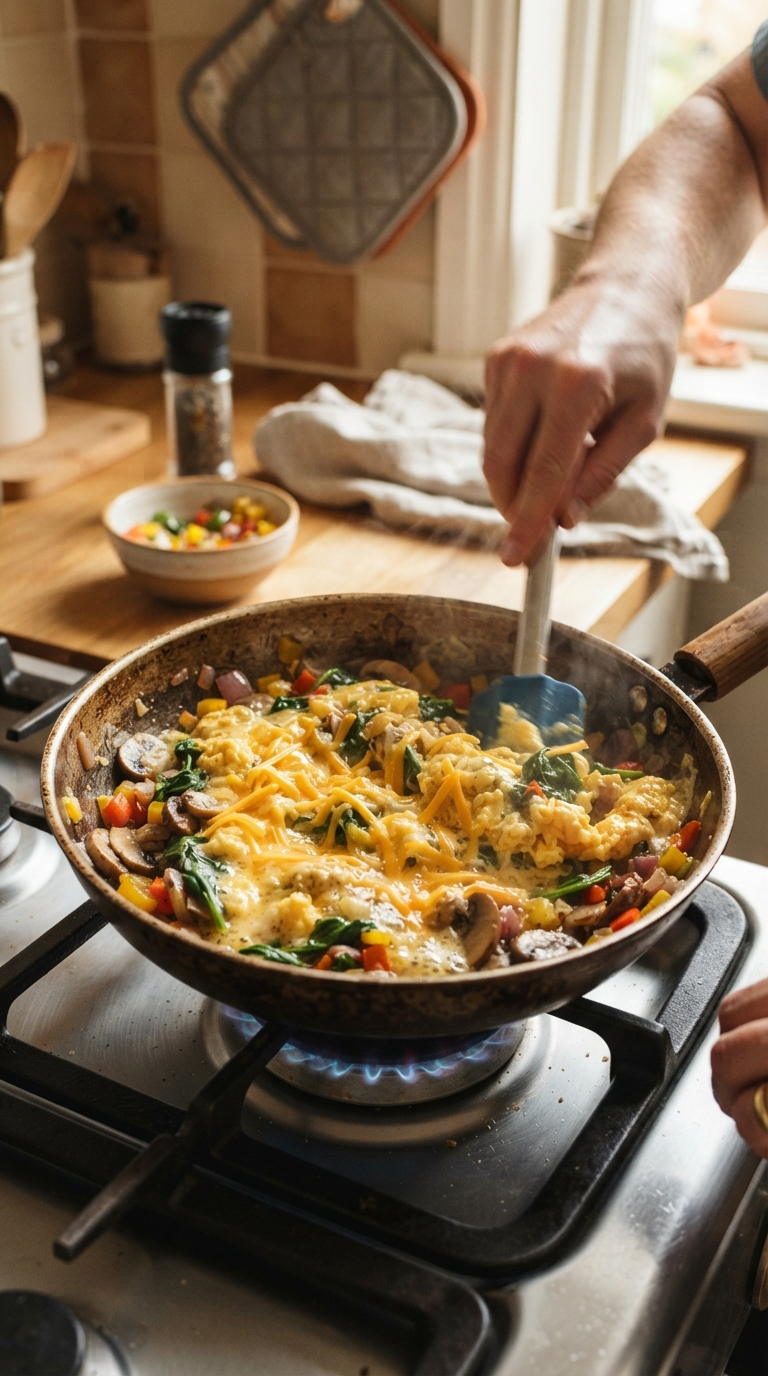
1. Make a Cheesy Vegetable Egg Scramble
This one saves me whenever I need breakfast quickly.
Prep time: 5 minutes
Cook time: 8–10 minutes
Crack 3 large eggs into a bowl and whisk them with 2 tablespoons of milk, a pinch of salt, and black pepper.
Heat 1 teaspoon of olive oil in a nonstick skillet over medium heat. Add 1/4 cup diced bell pepper, 1/4 cup sliced mushrooms, and 1/4 cup diced onion.
Cook the vegetables for about 3 minutes. They should soften slightly but still keep a little bite.
Add 1/2 cup spinach and cook for another minute. The spinach will shrink dramatically, which always makes me feel like I’ve performed a tiny kitchen magic trick.
Pour in the eggs.
Let them sit undisturbed for about 20 seconds, then gently push the eggs from the edges toward the center with a silicone spatula.
Cook for another 2–3 minutes until the eggs look softly set.
Sprinkle 1/4 cup shredded cheddar over the top and let it melt for about 30 seconds.
Serve immediately with sliced avocado.
2. Cook a Sausage and Egg Breakfast Skillet
This is one of my favorite weekend breakfasts because one pan handles almost everything.
Prep time: 5 minutes
Cook time: 12–15 minutes
Heat a large cast iron or nonstick skillet over medium heat.
Add 6 ounces of breakfast sausage. Break it into small pieces with a wooden spoon as it cooks.
Cook for about 5–6 minutes until the sausage browns and cooks through.
Add 1/2 cup broccoli florets and 1/4 cup diced bell pepper.
Cook for another 3–4 minutes. If the vegetables start sticking, add a tablespoon of water and cover the pan for a minute.
Make three small spaces in the mixture and crack one egg into each space.
Cover the skillet and cook for 3–4 minutes, depending on how firm you like the yolks.
Sprinkle with black pepper, smoked paprika, and a little shredded cheddar.
This breakfast comes out especially good when you let the sausage develop those browned little bits on the bottom of the pan. Don’t rush that part.
3. Whip Up a Spinach and Feta Omelet
A good omelet looks fancy, but the technique becomes easy after one or two attempts.
Prep time: 5 minutes
Cook time: 7 minutes
Whisk 3 eggs with 1 tablespoon of water, a pinch of salt, and black pepper.
Melt 1 teaspoon of butter in a nonstick skillet over medium-low heat.
Add 1/2 cup spinach and cook for about 1 minute.
Pour the eggs over the spinach.
Let the eggs cook gently for about 2 minutes. When the bottom looks set but the top still looks slightly wet, sprinkle 1/4 cup feta cheese across one side.
Fold the omelet in half.
Cook for another minute, then slide it onto a plate.
The key here is patience. High heat makes the outside rubbery before the inside has a chance to cook properly.
4. Prepare a Creamy Greek Yogurt Breakfast Bowl
Not every low carb breakfast needs a frying pan.
This option works especially well when you want something cold and refreshing.
Prep time: 5 minutes
Cook time: None
Add 1 cup plain unsweetened Greek yogurt to a bowl.
Top it with:
- 1/4 cup blueberries
- 1 tablespoon chopped walnuts
- 1 tablespoon chia seeds
- 1 tablespoon unsweetened shredded coconut
- A pinch of cinnamon
Stir gently and serve immediately.
If you prefer a sweeter flavor, add a small amount of your preferred no-sugar-added sweetener.
I often prepare the dry toppings ahead of time and keep them in a small container. That turns breakfast into a two-minute assembly job.
5. Make Bacon, Avocado, and Egg Cups
These little egg cups work beautifully for meal prep.
Prep time: 10 minutes
Bake time: 18–22 minutes
Preheat your oven to 375°F (190°C).
Grease a 6-cup muffin pan with butter or cooking spray.
Place one cooked bacon strip around the inside edge of each cup.
Whisk 5 eggs in a bowl with 1/4 cup shredded cheddar, 1/4 teaspoon garlic powder, and black pepper.
Divide the egg mixture among the muffin cups.
Bake for 18–22 minutes.
The centers should look set and slightly puffed.
Let them cool for about 5 minutes before removing them from the pan.
Serve with sliced avocado.
Don’t overfill the cups. Eggs puff while baking, and they can make quite an enthusiastic escape attempt.
Pro Tips & Tricks
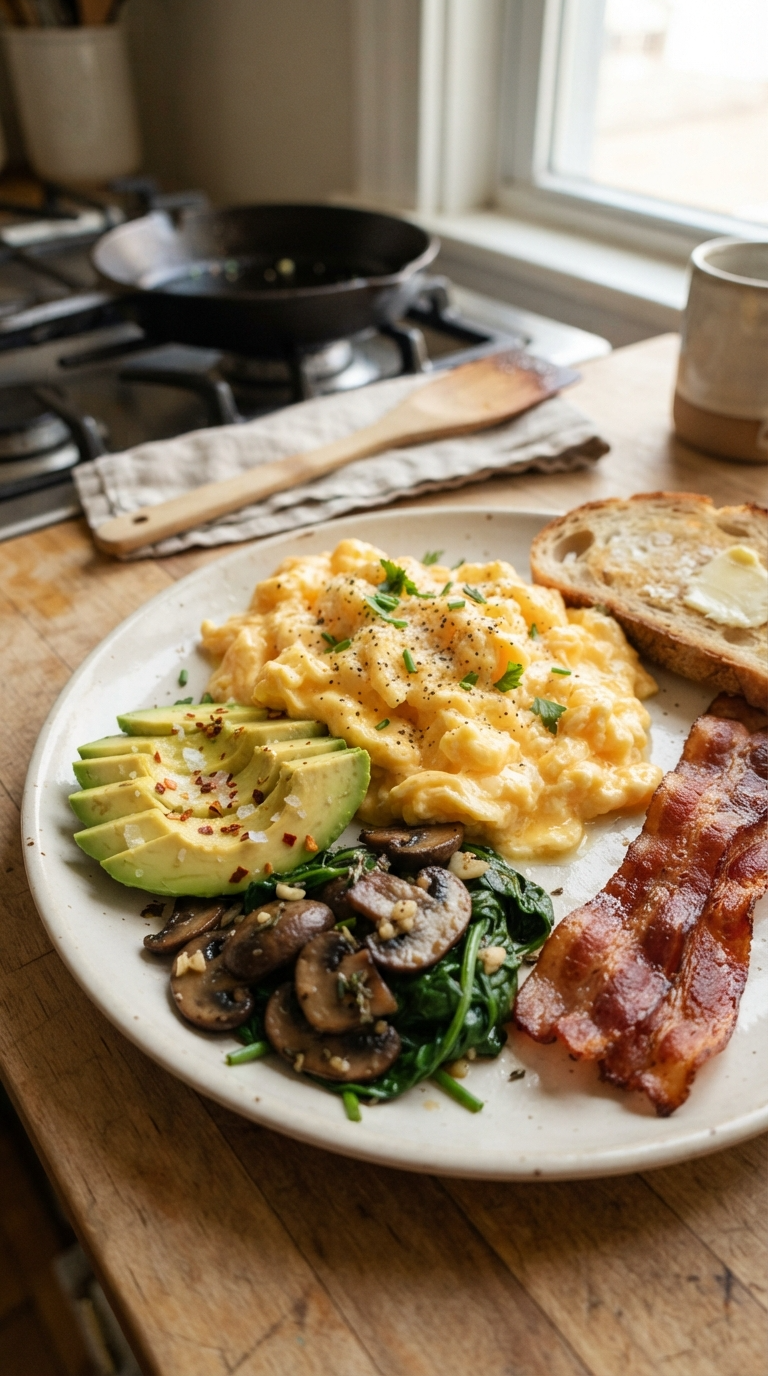
Don’t Overcook Your Eggs
Eggs continue cooking from residual heat after you remove them from the pan. Take scrambled eggs off the heat when they still look slightly creamy.
Cook Watery Vegetables First
Spinach, mushrooms, zucchini, and tomatoes release water during cooking. Cook them before adding eggs so your breakfast doesn’t turn watery.
Use a Good Nonstick Pan
A decent nonstick skillet makes omelets and scrambled eggs much easier. I like using a silicone spatula because it lets me move the eggs around without scratching the pan.
Prep Breakfast Components Ahead
Cook sausage, bacon, or chicken in advance and refrigerate it in airtight containers. Chop vegetables ahead of time too.
Then breakfast becomes mostly assembly instead of actual cooking.
Store Leftovers Properly
Place cooked breakfast portions in airtight containers and refrigerate them promptly.
Most cooked egg dishes taste best within 3–4 days when refrigerated properly.
For reheating, use the microwave in short 20–30 second intervals or warm the food gently in a skillet.
Variations & Substitutions
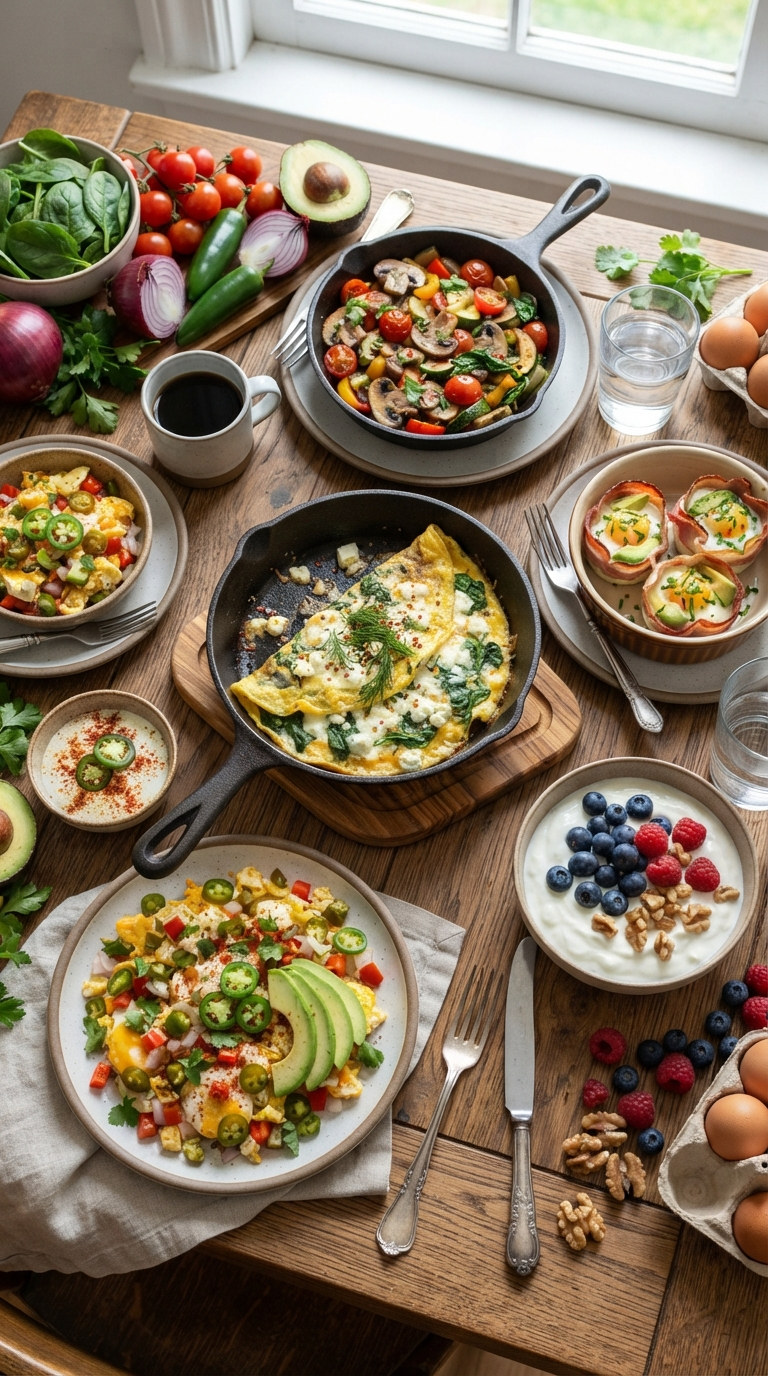
One reason I keep these recipes around is how easily they adapt to whatever happens to be hiding in the refrigerator.
For a vegetarian breakfast, skip the sausage and add mushrooms, spinach, bell peppers, broccoli, or zucchini. Feta and cheddar both add plenty of savory flavor.
For a spicy version, add diced jalapeño, red pepper flakes, or a spoonful of your favorite hot sauce. I especially like jalapeño with cheddar and scrambled eggs.
For a dairy-free option, leave out the cheese and use olive oil instead of butter. Add avocado, herbs, or extra vegetables for more flavor.
You can also swap breakfast sausage for cooked chicken, turkey sausage, smoked salmon, or leftover roasted meat.
If you’re following a specific low-carb eating plan, check packaged ingredients and labels because sauces, sausage, yogurt, and other prepared foods can contain different amounts of carbohydrates.
Serving Suggestions
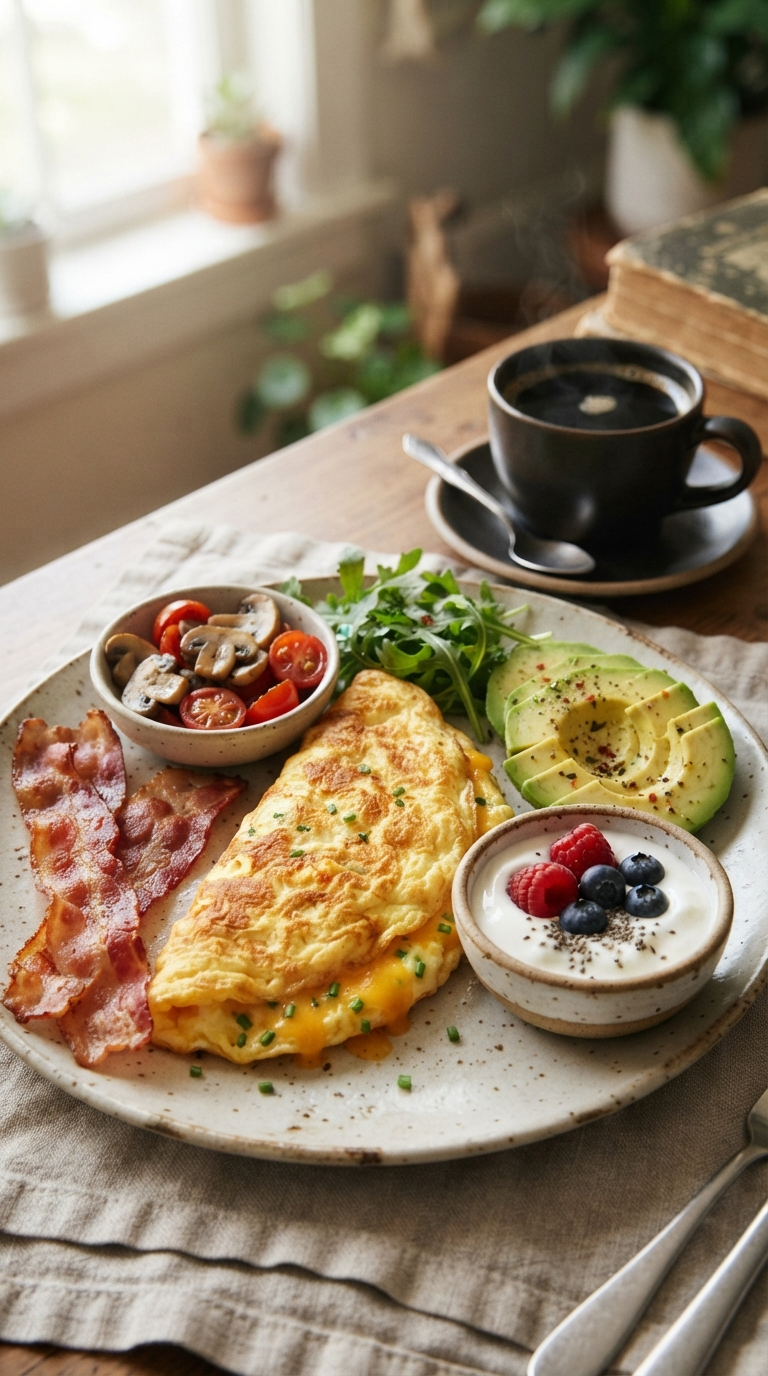
These breakfasts work for much more than rushed weekday mornings.
For a relaxed weekend brunch, serve the sausage and egg skillet with sliced avocado, fresh tomatoes, and coffee.
For meal prep, divide egg cups or scrambled egg mixtures into individual containers. Add avocado or fresh toppings just before eating.
For a lighter breakfast, choose the Greek yogurt bowl and add a small handful of nuts or seeds.
You can also create a simple breakfast platter with scrambled eggs, avocado, sautéed mushrooms, tomatoes, cheese, and cooked sausage. Put everything in separate sections and let everyone build their own plate.
That’s particularly useful when you’re feeding people with different tastes.
FAQ’s
Can I make these low carb breakfasts ahead of time?
Yes. Egg muffins, cooked sausage, bacon, and breakfast casseroles work especially well for meal prep.
Prepare them ahead, refrigerate them in airtight containers, and reheat individual portions when needed.
How long do cooked egg breakfasts last in the refrigerator?
For best quality, eat cooked egg dishes within about 3–4 days when stored properly in the refrigerator.
Keep them refrigerated rather than leaving them at room temperature for extended periods.
Can I freeze egg breakfast recipes?
Yes, many baked egg dishes freeze well.
Allow them to cool completely, wrap individual portions, and place them in freezer-safe containers or bags. Thaw them in the refrigerator before reheating for the best texture.
Why do my scrambled eggs turn watery?
Watery vegetables often cause the problem. Spinach, mushrooms, tomatoes, and zucchini release moisture as they cook.
Cook those ingredients first and let excess moisture evaporate before adding your eggs.
Can I replace regular milk in egg recipes?
Absolutely. Unsweetened almond milk works well, and you can also use a small amount of cream or simply leave the milk out.
The eggs will still cook successfully.
What’s the easiest recipe for beginners?
Start with the cheesy vegetable scramble.
It doesn’t require complicated folding or precise timing. Even if the eggs don’t look perfect, they still taste delicious.
Closing / Final Thoughts
Good breakfast doesn’t have to mean complicated breakfast.
After making these easy low carb breakfast recipes again and again, I’ve learned that the best morning meals usually rely on simple ingredients, sensible preparation, and a little patience.
Keep eggs in the refrigerator, a few vegetables ready to cook, and one or two favorite proteins on hand. You’ll have plenty of combinations without eating the exact same plate every morning.
And don’t worry if your first omelet looks more like scrambled eggs wearing a folded costume. Mine certainly did.
Start with the recipe that sounds best to you, make it your own, and don’t be afraid to swap ingredients based on what you already have in the kitchen. That’s how most of my favorite breakfasts became favorites in the first place.