
There’s something comforting about waking up to a warm bowl of oatmeal when the morning feels a little too busy. I started making oatmeal regularly after one of those mornings when I had absolutely no plan for breakfast. I grabbed some oats, poured in milk, added a banana, and hoped for the best.
Somehow, that slightly improvised bowl became one of my favorite breakfasts.
After making healthy oatmeal breakfast recipes more times than I can count, I’ve learned that oatmeal doesn’t have to taste plain, boring, or like something you eat only because it’s “good for you.” A few simple ingredients can turn basic oats into a creamy, satisfying breakfast that feels like a treat.
My biggest oatmeal discovery came from letting the oats cook slowly instead of blasting them over high heat. I used to rush this part, and the result usually ended up either gluey or watery. A little patience makes a surprisingly big difference.
These days, I keep oats in my pantry because they can rescue almost any rushed morning. I can make a warm bowl in minutes, prepare overnight oats the night before, or bake a batch for several breakfasts.
And yes, I’ve eaten oatmeal straight from the refrigerator while standing in the kitchen. No judgment here.
Why You’ll Love This Recipe
- Quick and practical: You can prepare a warm bowl in about 10 minutes.
- Easy to customize: Change the fruit, nuts, spices, or milk based on what you have.
- Budget-friendly: Rolled oats cost very little compared with many packaged breakfast options.
- Meal-prep friendly: Make several portions ahead and refrigerate them for busy mornings.
- Actually satisfying: Oats pair beautifully with fruit, nuts, seeds, yogurt, and other toppings.
The best part is that you don’t need fancy ingredients. A simple pantry can give you plenty of combinations.
Ingredients List
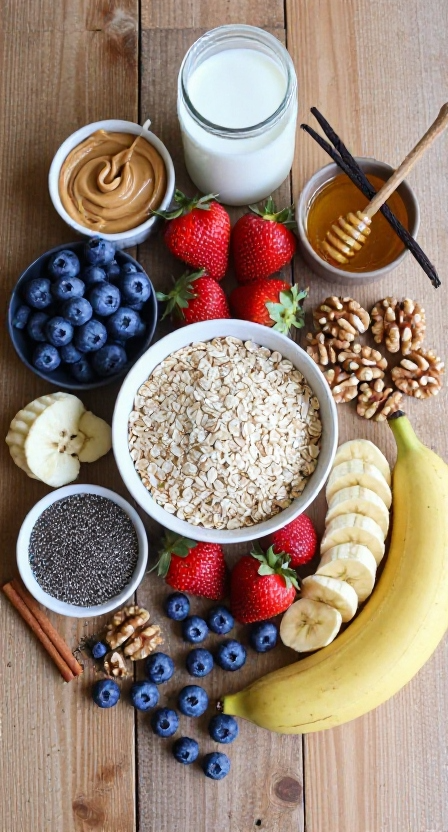
This recipe makes 2 generous servings.
For the Oatmeal
- 1 cup old-fashioned rolled oats
- 2 cups milk of your choice
- 1/2 cup water
- 1 medium ripe banana, mashed
- 1/2 teaspoon ground cinnamon
- 1/2 teaspoon vanilla extract
- 1 small pinch of salt
For the Toppings
- 1/2 cup fresh berries or sliced fruit
- 2 tablespoons chopped walnuts or almonds
- 1 tablespoon chia seeds
- 1 tablespoon peanut butter or almond butter
- 1 teaspoon honey or maple syrup, optional
- 2 tablespoons plain Greek yogurt, optional
Easy Substitutions
You can use dairy milk, unsweetened almond milk, soy milk, oat milk, or another milk you enjoy.
If you don’t have bananas, use unsweetened applesauce for some natural sweetness and a softer texture.
You can also replace walnuts with pecans, almonds, pumpkin seeds, or sunflower seeds.
For gluten-free oatmeal, choose oats specifically labeled gluten-free if you need to avoid gluten because of cross-contact concerns.
Step-by-Step Instructions
1. Mash the Banana
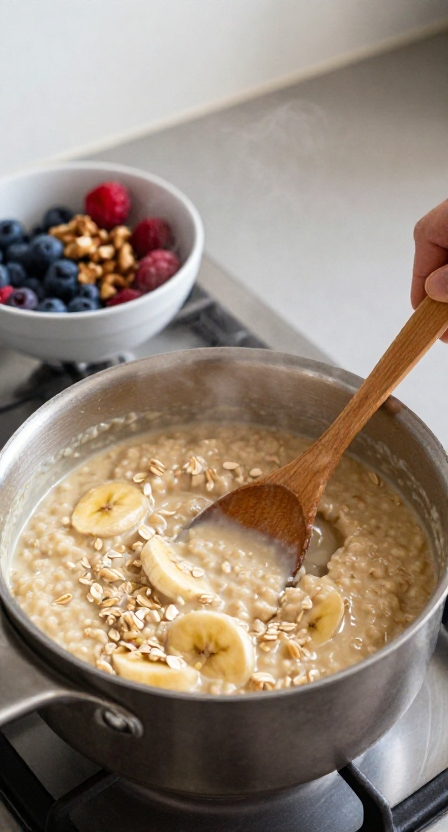
Place the ripe banana in a medium saucepan and mash it with a fork until mostly smooth.
A few tiny pieces are completely fine. In fact, I prefer leaving some because they soften during cooking and give the oatmeal little pockets of banana flavor.
Time: 1 minute
2. Add the Oats and Liquid
Add the rolled oats, milk, water, cinnamon, vanilla, and salt to the saucepan.
Give everything a good stir before placing the pan over medium heat.
I recommend starting with both milk and water. The milk creates creaminess while the water keeps the oatmeal from becoming overly heavy.
Time: 1 minute
3. Bring Everything to a Gentle Simmer
Heat the mixture until small bubbles begin appearing around the edges.
Don’t crank the heat to high just to make breakfast happen faster. I tried that plenty of times, and the bottom of the pan always seemed determined to become a sticky oatmeal disaster.
Keep the heat around medium-low once the mixture starts simmering.
Time: 2–3 minutes
4. Cook Until Creamy
Stir the oatmeal every so often as it cooks.
After about 5 minutes, the oats should look thick and creamy. The liquid should mostly absorb, but the oatmeal should still look slightly loose.
Remember that oatmeal continues thickening after you remove it from the heat.
If it already looks extremely thick in the saucepan, add a splash of milk.
Time: 5 minutes
5. Taste and Adjust
Turn off the heat and taste a small spoonful.
Add another pinch of cinnamon if you want more spice. If you prefer sweeter oatmeal, add a little honey or maple syrup.
I usually keep the sweetness fairly mild because the banana and toppings already add plenty of flavor.
6. Let It Rest
Let the oatmeal sit for about 1–2 minutes.
This little resting period gives the oats time to finish absorbing the liquid and creates a thicker, creamier texture.
If your oatmeal becomes too thick, simply stir in a tablespoon or two of warm milk.
7. Add Your Toppings
Divide the oatmeal between two bowls.
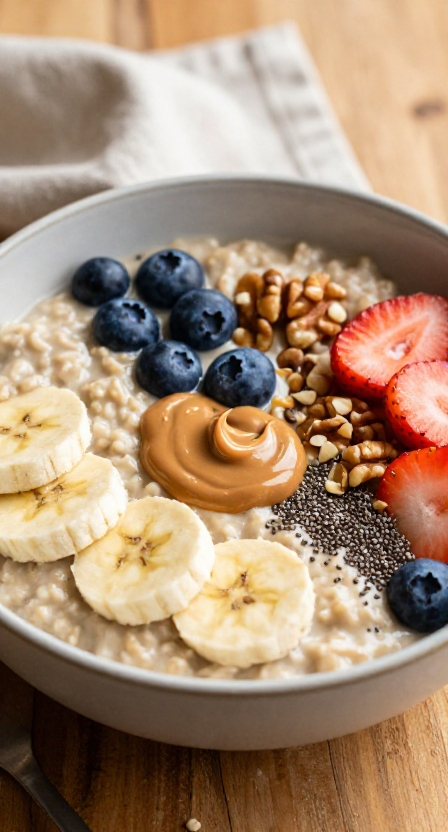
Add berries or sliced fruit, chopped nuts, chia seeds, and a spoonful of nut butter.
For extra creaminess, add Greek yogurt right in the center.
If you’re serving children, you can create little sections of different toppings so everyone can choose their favorite combination.
Total cooking time: about 10 minutes
Pro Tips & Tricks
Don’t Overcook the Oats
This remains my number-one oatmeal rule.
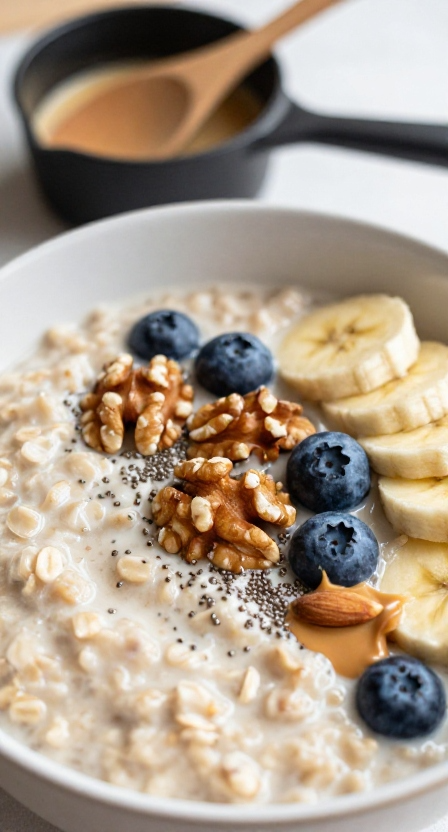
Oats continue absorbing liquid as they sit, so remove them from the stove when they still look slightly creamier and looser than your ideal texture.
Use a Ripe Banana
A ripe banana gives the oatmeal natural sweetness and a creamy texture.
If your banana has plenty of brown spots, that’s perfect. Save the sad-looking banana instead of throwing it away. Oatmeal can give it a very respectable second career.
Toast Your Nuts
If you have an extra five minutes, lightly toast your walnuts or almonds in a dry skillet.
The flavor becomes deeper and nuttier, and the crunchy topping contrasts beautifully with soft oatmeal.
Just watch them closely because nuts can go from perfectly toasted to burnt surprisingly fast.
Make Several Portions Ahead
Cook a larger batch and divide it into airtight containers.
Let the oatmeal cool before refrigerating it, then cover it and store it in the refrigerator.
For the best texture, add fresh toppings after reheating rather than storing everything together.
Reheat With Extra Liquid
Cold oatmeal becomes much thicker in the refrigerator.
When reheating, stir in 1–2 tablespoons of milk or water per serving.
Warm it gently in the microwave or in a saucepan over low heat, stirring occasionally until creamy again.
Keep Crunchy Toppings Separate
Don’t mix nuts and seeds into oatmeal that you plan to store for several days.
They can lose their crunch.
Instead, keep them in a small container and sprinkle them over the oatmeal right before serving.
Variations & Substitutions
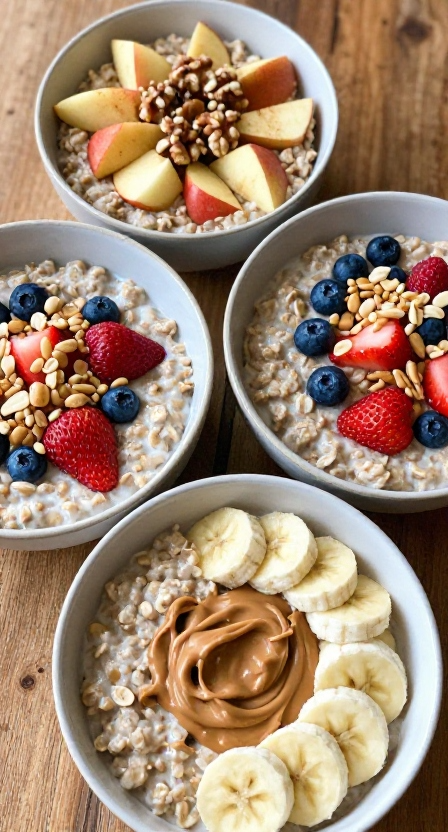
One reason I keep coming back to oatmeal is that the basic recipe never gets boring when you change the toppings.
Apple Cinnamon Oatmeal
Replace the banana with 1/2 cup finely diced apple.
Add an extra pinch of cinnamon and a tiny pinch of nutmeg. Cook the apple with the oats so it becomes tender.
Top with chopped walnuts for a cozy breakfast that tastes like apple pie without requiring you to actually bake a pie before breakfast.
Berry Almond Oatmeal
Skip the banana if you prefer a less creamy base.
Cook the oats with your choice of milk, then top them with strawberries, blueberries, raspberries, sliced almonds, and a spoonful of Greek yogurt.
Add a small drizzle of honey if you like extra sweetness.
Peanut Butter Banana Oatmeal
Keep the banana in the base and add 1 tablespoon of peanut butter while the oatmeal is still warm.
Stir until completely creamy.
Top with banana slices and a few chopped peanuts.
For a dairy-free version, use your favorite plant-based milk and dairy-free yogurt if desired.
Chocolate Oatmeal
For mornings when you want breakfast to feel a little more dessert-like, stir 1 teaspoon unsweetened cocoa powder into the oats while they cook.
Add banana for natural sweetness and top with peanut butter.
A few sliced strawberries on top make the whole bowl feel extra special.
Overnight Oats
For a completely no-cook option, combine 1/2 cup rolled oats with 1/2 cup milk, 1/4 cup Greek yogurt, 1 teaspoon chia seeds, and your favorite fruit.
Stir everything together in a jar, cover it, and refrigerate overnight.
The oats soften while you sleep, so breakfast waits for you instead of the other way around.
Serving Suggestions
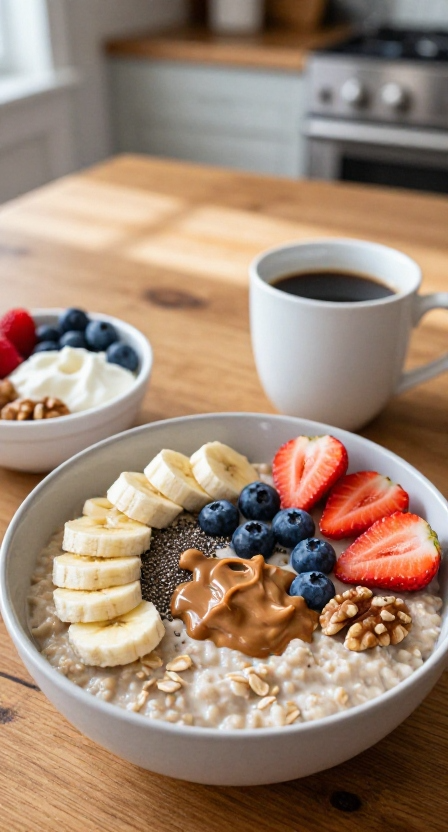
I love serving warm oatmeal with a cup of coffee or tea when I have a slower morning.
For a more substantial breakfast, add Greek yogurt, nuts, seeds, or nut butter alongside fresh fruit.
If you’re preparing breakfast for the family, set out several toppings and let everyone build their own bowl.
Try sliced bananas, berries, chopped nuts, coconut, cinnamon, nut butter, yogurt, and a small drizzle of honey or maple syrup.
For meal prep, portion the cooked oatmeal into individual containers. Add the toppings after reheating so everything tastes fresher.
Oatmeal also works well as part of a breakfast spread. Serve it alongside boiled eggs, fresh fruit, yogurt, or whole-grain toast when you’re feeding several people.
FAQ’s
How long can I store cooked oatmeal in the refrigerator?
Cooked oatmeal can generally stay refrigerated in an airtight container for several days. Cool it promptly, refrigerate it, and check its appearance and smell before eating.
Can I make healthy oatmeal breakfast recipes ahead of time?
Absolutely. Cook a batch at the beginning of the week and divide it into individual portions.
Store toppings separately whenever possible. This keeps fruit fresher and nuts crunchier.
Why did my oatmeal become too thick?
Oats continue absorbing liquid after cooking, especially during refrigeration.
Stir in a splash of milk or water while reheating until you reach the consistency you want.
Can I freeze oatmeal?
Yes. Portion cooled oatmeal into freezer-safe containers and freeze it.
Thaw it in the refrigerator, then reheat gently with a little milk or water. The texture may change slightly after freezing, but stirring well while reheating helps bring it back together.
Can I use quick oats instead of rolled oats?
Yes, but the cooking time and texture will change.
Quick oats cook faster and usually produce a softer, smoother bowl. Start checking them earlier and reduce the cooking time according to the package directions.
Why does my oatmeal taste bland?
Oatmeal needs seasoning just like other foods.
A small pinch of salt, cinnamon, vanilla, ripe fruit, and flavorful toppings can make a huge difference. Don’t rely on sugar alone to create flavor.
Closing / Final Thoughts
After making oatmeal in more combinations than I can remember, I’ve realized that the secret isn’t some complicated recipe.
It’s having a dependable base and knowing how to make it your own.
Start with creamy oats, add fruit, bring in some crunch, and finish with your favorite topping. Some mornings call for berries and almonds. Other mornings absolutely demand peanut butter and banana.
And that’s the fun of healthy oatmeal breakfast recipes: you can change the bowl depending on your mood, your pantry, and how much time you have.
So grab that container of oats hiding in your cupboard and give it another chance. You might be surprised by how good a simple breakfast can taste.
And if your first bowl ends up too thick, too thin, or covered in an unnecessarily enormous pile of toppings, welcome to home cooking. Adjust it next time and keep going. That’s how the good recipes become your own.