
I still remember one of my first attempts at making breakfast without anyone hovering over the stove. I cracked an egg into a pan, turned the heat up high because I thought that would make everything cook faster, and then wondered why the bottom turned brown before the middle had even set.
It wasn’t exactly a masterpiece.
But that slightly overcooked egg taught me something I still use in my kitchen: simple food rewards a little patience.
Over the years, I’ve made breakfast in just about every mood possible. I’ve cooked half-awake before work, made enormous weekend breakfasts for family, and stood in the kitchen trying to rescue toast after forgetting it in the toaster. These five simple breakfast recipes for beginners come from those everyday experiences.
None of them require fancy equipment or complicated techniques. You can make them with a frying pan, saucepan, toaster, bowl, and a little confidence.
I’ve also included the little things that took me several attempts to figure out, because those are often the details that make the biggest difference.
Why You’ll Love
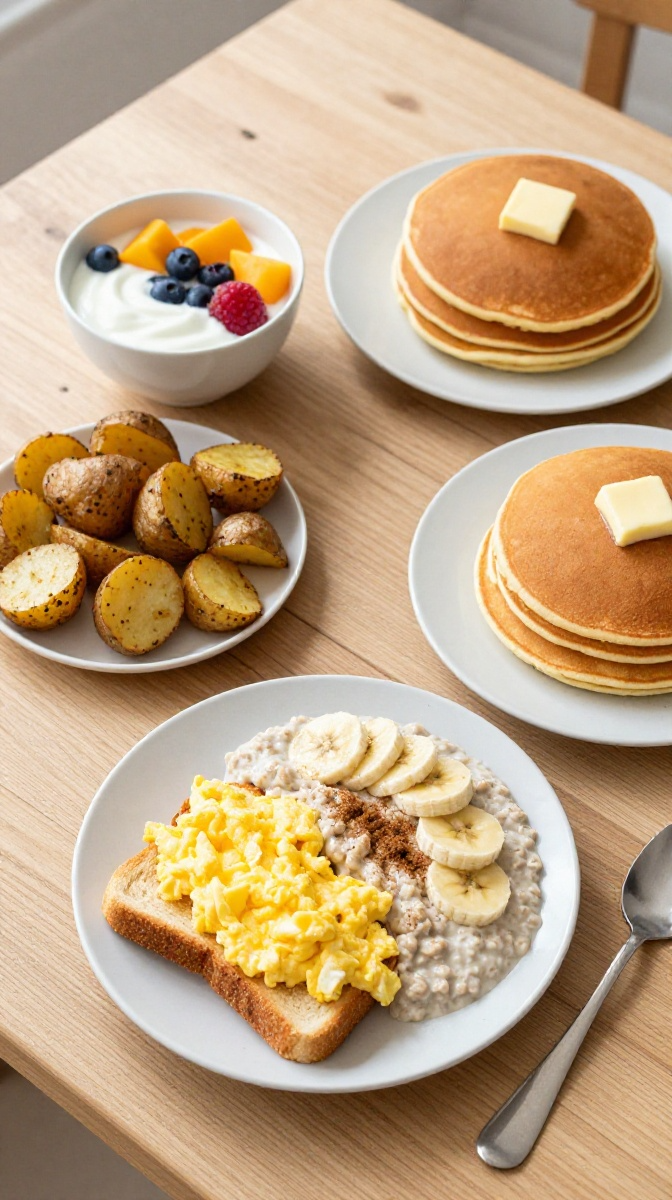
- Beginner-friendly: Each recipe uses familiar ingredients and straightforward techniques.
- Quick: Most breakfasts land on the table in about 10–20 minutes.
- Budget-friendly: Eggs, bread, oats, bananas, and potatoes can stretch surprisingly far.
- Flexible: You can swap ingredients based on what’s sitting in your refrigerator.
- Forgiving: Even if your first pancake looks more like a map than a circle, breakfast will still taste good.
Ingredients
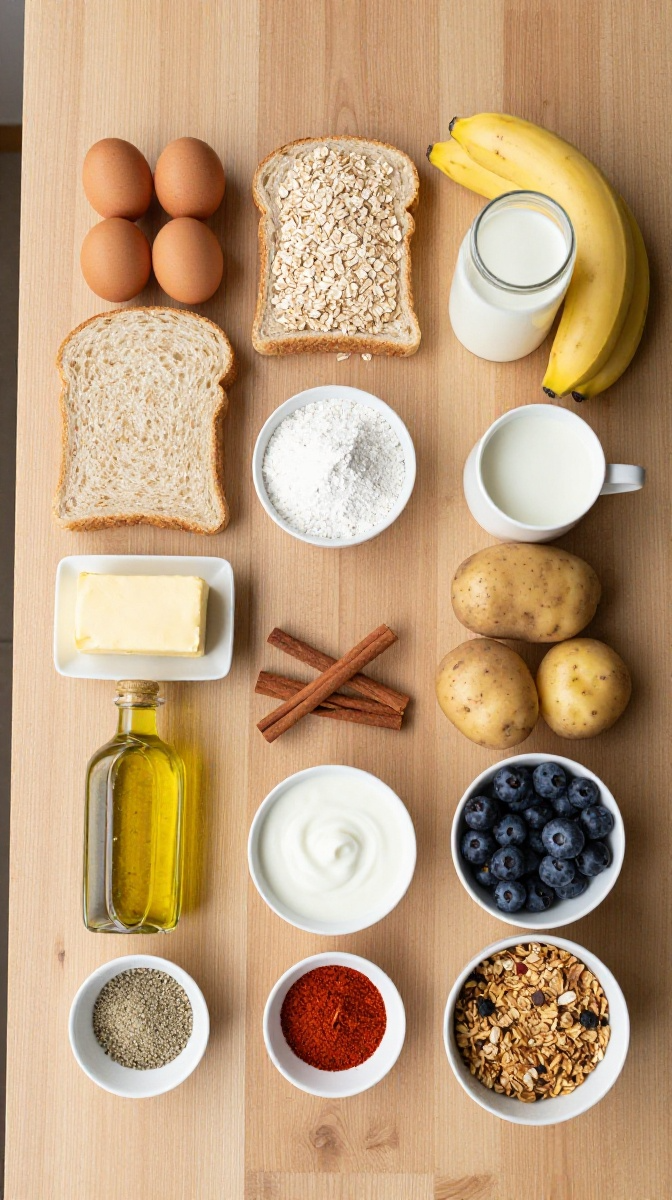
You don’t need a refrigerator packed with specialty ingredients to make good breakfasts. I usually keep a handful of basics around and build from there.
For Scrambled Eggs on Toast
- 2 large eggs
- 1 tablespoon milk or water
- 1 tablespoon butter
- 2 slices bread
- 1/4 teaspoon salt
- 1/8 teaspoon black pepper
- 1 tablespoon chopped green onion or chives, optional
- 2 tablespoons grated cheddar cheese, optional
You can use water instead of milk. I actually prefer water when I want especially soft scrambled eggs because it keeps the mixture light without making it heavy.
For Easy Banana Oatmeal
- 1/2 cup old-fashioned rolled oats
- 1 cup milk or water
- 1 ripe banana
- 1/2 teaspoon cinnamon
- 1 teaspoon honey or maple syrup, optional
- Pinch of salt
- 1 tablespoon peanut butter, optional
- 1 tablespoon chopped nuts, optional
Use dairy-free milk if that’s what you have. Almond, oat, and soy milk all work well.
For Beginner Pancakes
- 1 cup all-purpose flour
- 2 tablespoons sugar
- 1 teaspoon baking powder
- 1/4 teaspoon salt
- 1 large egg
- 3/4 cup milk
- 2 tablespoons melted butter
- 1/2 teaspoon vanilla extract
- Butter or oil for the pan
If you don’t have vanilla, skip it. The pancakes will still taste good.
For Crispy Breakfast Potatoes
- 2 medium potatoes
- 1 tablespoon olive oil or butter
- 1/2 teaspoon salt
- 1/4 teaspoon black pepper
- 1/2 teaspoon paprika
- 1/4 teaspoon garlic powder
- 2 tablespoons chopped onion, optional
You can replace the seasonings with whatever you enjoy. A little chili powder gives these potatoes a nice kick.
For a Simple Yogurt and Fruit Bowl
- 1 cup plain or vanilla yogurt
- 1/2 banana, sliced
- 1/2 cup berries or chopped seasonal fruit
- 2 tablespoons granola
- 1 teaspoon honey, optional
- 1 tablespoon chopped nuts or seeds, optional
This one doesn’t even require cooking, which makes it perfect for mornings when you don’t want to touch a stove.
Step-by-Step Instructions
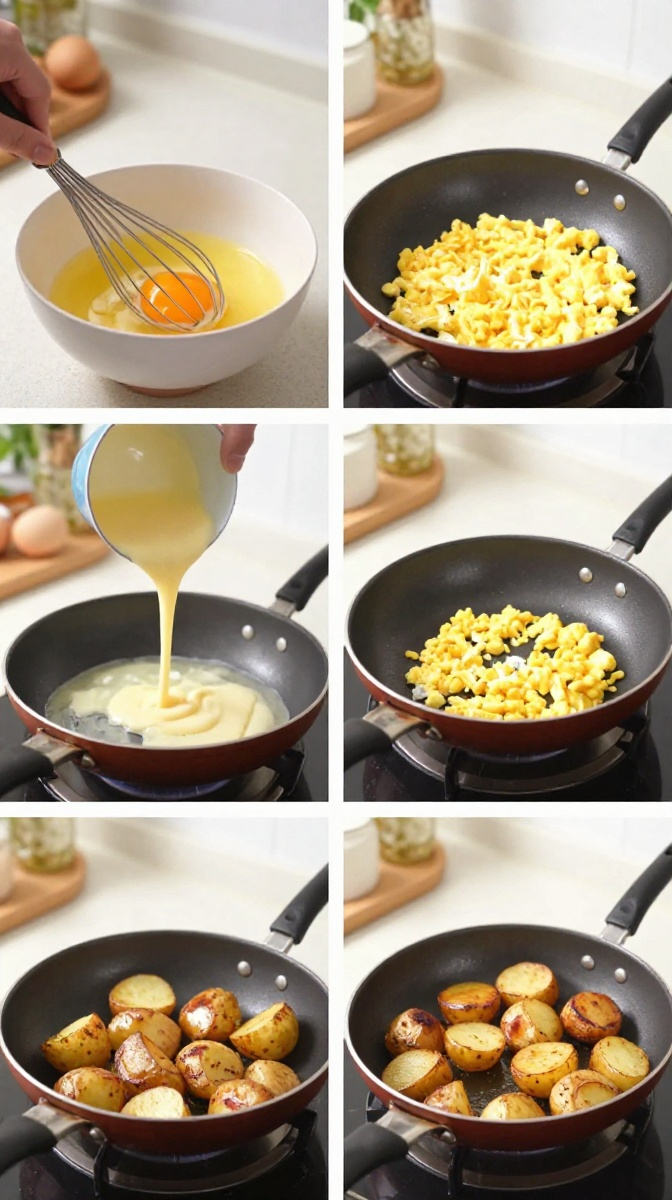
1. Make Soft Scrambled Eggs on Toast
Time: 10 minutes
Start by cracking two eggs into a small bowl. Add the milk or water, salt, and pepper, then beat everything with a fork until the yolks and whites blend together.
Don’t worry about whipping the eggs into a foam. Just mix them until you no longer see separate streaks of egg white.
Put a nonstick frying pan over low to medium-low heat and add the butter. Once the butter melts and looks slightly foamy, pour in the eggs.
Now comes the part I wish someone had told me when I started cooking eggs: don’t walk away.
Let the eggs sit for about 10 seconds, then gently push them from the edges toward the center with a silicone spatula.
Keep folding them every few seconds. After about 2–3 minutes, you’ll see soft curds forming.
Take the pan off the heat while the eggs still look slightly glossy. They’ll continue cooking from the leftover heat.
Toast your bread and pile the eggs on top. Add cheddar, chives, or a little hot sauce if you like.
My biggest egg mistake involved waiting until the eggs looked completely finished before removing them from the pan. By then, they had gone from creamy to rubbery. Take them off a little earlier than you think.
2. Cook a Cozy Banana Oatmeal
Time: 7–10 minutes
Pour the milk or water into a small saucepan and bring it to a gentle simmer over medium heat.
Add the oats, salt, and half of the banana, mashed with a fork.
Stir occasionally for about 5 minutes. The oats should soften and become creamy, while the banana should melt into the mixture.
Add cinnamon and taste it.
If you want it sweeter, stir in honey or maple syrup. Spoon the oatmeal into a bowl and top it with the remaining banana.
A spoonful of peanut butter makes this breakfast especially satisfying.
The trick here involves the heat. If the milk boils aggressively, it can foam up and make a mess before you even realize what’s happening. Keep the heat moderate and give the oats a stir every so often.
3. Make Your First Batch of Pancakes
Time: 15–20 minutes
Add the flour, sugar, baking powder, and salt to a mixing bowl. Stir them together with a whisk or fork.
In another bowl, beat the egg with the milk, melted butter, and vanilla.
Pour the wet ingredients into the dry ingredients. Stir gently until everything just comes together.
And please don’t try to make the batter perfectly smooth.
A few small lumps are completely fine. I used to stir pancake batter like I was trying to remove every lump in existence, and my pancakes came out dense and chewy. Gentle mixing gives you a much lighter result.
Heat a nonstick skillet or cast iron pan over medium heat. Add a small amount of butter.
Scoop about 1/4 cup of batter into the pan for each pancake.
Cook for roughly 2 minutes. You’ll know it’s ready to flip when bubbles appear across the surface and the edges look slightly set.
Slide your spatula underneath and flip it confidently.
Cook the second side for another 1–2 minutes until golden brown.
If the first pancake comes out too dark, lower the heat. If it stays pale and takes forever to cook, increase the heat slightly.
Your first pancake often acts as a test pancake. That’s perfectly normal.
4. Get Crispy Breakfast Potatoes
Time: 20–25 minutes
Wash the potatoes and cut them into small cubes. Try to keep the pieces roughly the same size so they cook evenly.
Place the potatoes in a saucepan, cover them with water, and add a small pinch of salt.
Bring the water to a boil and cook the potatoes for about 5 minutes. You don’t want them completely soft. A fork should enter them with some resistance.
Drain them well and let them sit for a minute so excess moisture can escape.
Heat olive oil or butter in a large skillet over medium-high heat.
Add the potatoes in a single layer. Don’t pile them into a mountain.
Cook for 8–10 minutes, turning them occasionally, until the outside becomes golden and crisp.
Add paprika, garlic powder, black pepper, salt, and onion during the final few minutes.
The discovery that changed my breakfast potatoes happened completely by accident: dry potatoes crisp better. I once rushed them from the boiling water straight into the pan and ended up steaming them instead of browning them.
Give them a minute to dry. It makes a noticeable difference.
5. Build a Five-Minute Yogurt and Fruit Bowl
Time: 5 minutes
Spoon the yogurt into a bowl.
Add sliced banana, berries, or whatever fruit looks good.
Sprinkle granola and chopped nuts over the top. Finish with a little honey if you want extra sweetness.
That’s it.
This breakfast sounds almost too simple to deserve instructions, but presentation makes a difference here. I like layering the fruit instead of dumping everything into the center. It takes another 30 seconds and makes breakfast feel much more special.
Pro Tips & Tricks
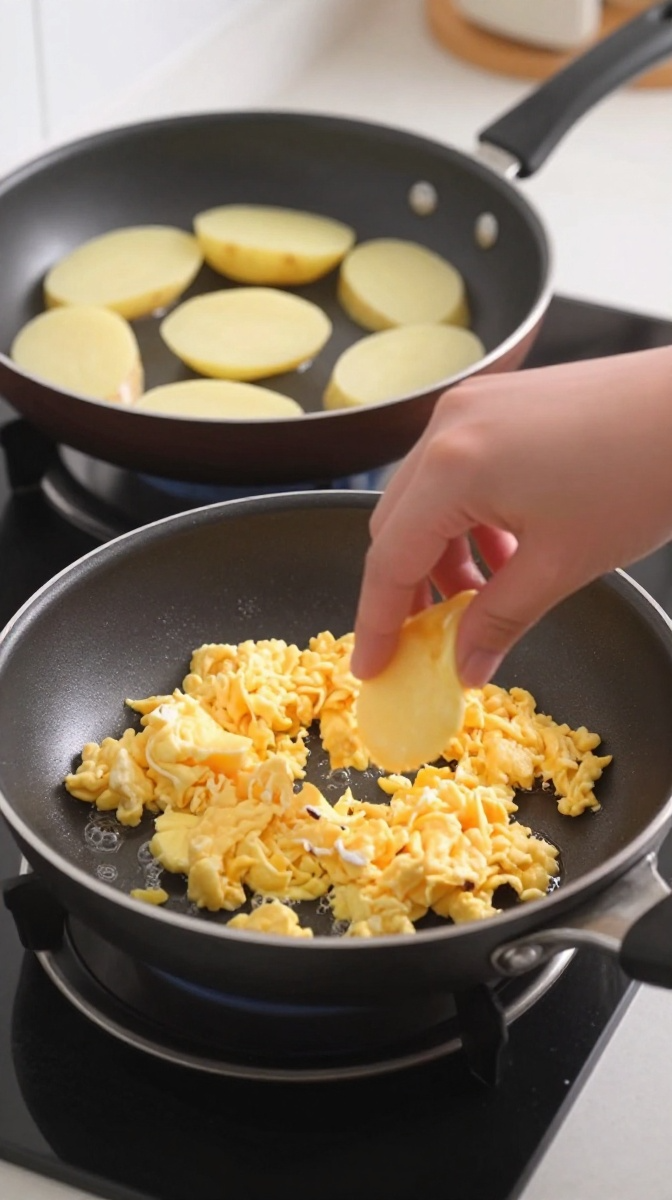
Keep the heat lower than you think. Beginners often turn the stove too high because they want breakfast finished quickly. High heat can burn butter, brown eggs too quickly, and scorch pancakes. Medium or medium-low gives you much more control.
Read the visual cues instead of relying only on the clock. Cooking times vary between stoves, pans, and ingredient sizes. Golden edges, bubbling pancake batter, soft egg curds, and creamy oatmeal tell you more than a timer alone.
Don’t overcrowd your pan. This matters especially for breakfast potatoes. Give ingredients enough room to touch the hot surface. If everything sits on top of everything else, you’ll get steaming instead of crisping.
Taste as you go. A tiny pinch of salt can completely change oatmeal or potatoes. Add a little, taste, and adjust instead of adding a large amount at once.
Prep a little the night before. You can cut potatoes, portion oats, wash fruit, and measure pancake ingredients ahead of time. Store prepared ingredients properly in the refrigerator when necessary.
For storage, refrigerate cooked eggs, potatoes, pancakes, and oatmeal in airtight containers and use them within about 3–4 days. Yogurt bowls taste best when you assemble them fresh because granola becomes soft in the refrigerator.
Variations & Substitutions
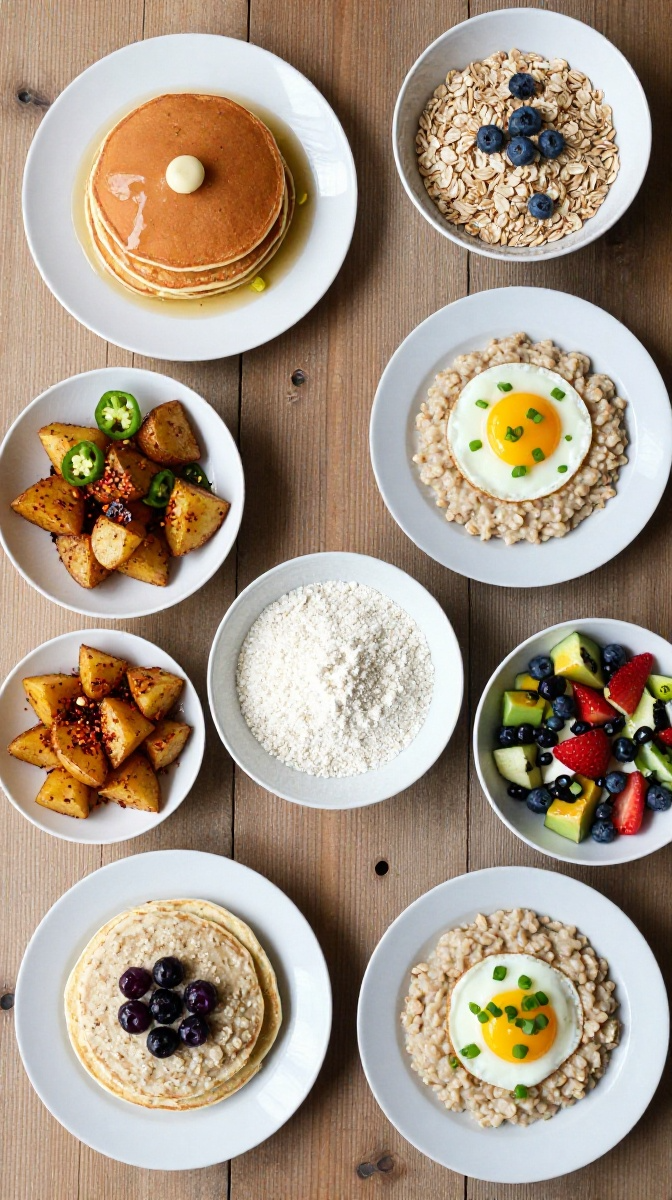
These recipes work as starting points rather than strict rules.
For vegan pancakes, replace the egg with a suitable egg substitute and use plant-based milk and melted plant-based butter or neutral oil. You can also make a quick banana pancake using mashed banana, flour, plant milk, and baking powder.
For savory oatmeal, skip the banana, cinnamon, and sweetener. Cook the oats with water or broth, then add a fried egg, black pepper, chopped green onion, and a little cheese.
For spicy breakfast potatoes, add chopped jalapeño or a pinch of chili flakes along with the paprika. I like serving them with scrambled eggs and a spoonful of salsa.
You can also turn the pancakes into a fruit breakfast by folding blueberries or chopped strawberries into the batter just before cooking.
If you need a gluten-free option, use a certified gluten-free flour blend for the pancakes and certified gluten-free oats for the oatmeal.
Serving Suggestions
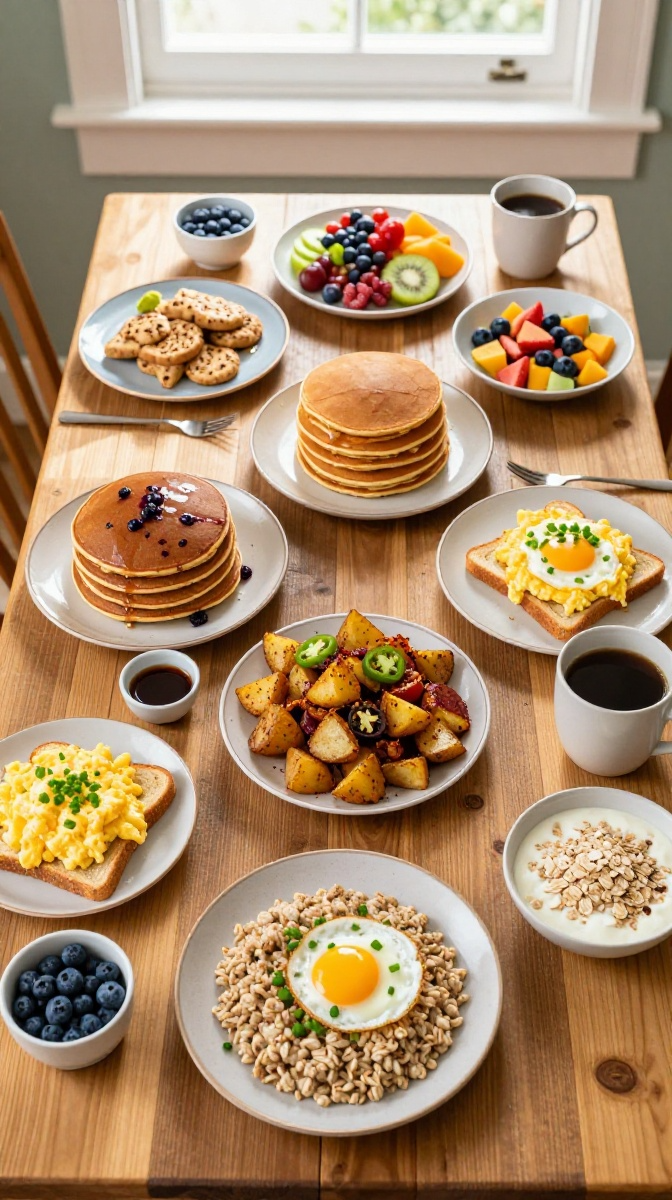
For a quiet weekday breakfast, I usually keep things simple: scrambled eggs on toast with fresh fruit and coffee or tea.
For a lazy weekend morning, put the pancakes, crispy potatoes, eggs, fruit, and yogurt on the table and let everyone build their own plate.
The breakfast potatoes also make a great side dish for an omelet or fried eggs.
If you’re feeding children, pancakes and banana oatmeal offer plenty of room for toppings. Put sliced fruit, yogurt, nut butter, or a little syrup on the table and let everyone customize their bowl or plate.
For guests, I like preparing the pancake batter and potato cubes ahead of time. Then I can cook everything in batches instead of spending the entire morning in the kitchen.
FAQ’s
Can I make these breakfasts ahead of time?
Yes. Pancakes, oatmeal, and breakfast potatoes all work well for meal prep. Cook them, cool them promptly, and store them in airtight containers in the refrigerator.
For the best texture, assemble yogurt and fruit bowls right before serving.
How should I reheat pancakes?
Warm pancakes in a toaster, toaster oven, or skillet. The microwave works when you’re in a hurry, but it can make them soft.
I usually prefer a toaster because it brings back a little crispness around the edges.
Why do my scrambled eggs turn rubbery?
You probably cooked them too long or used excessive heat.
Cook scrambled eggs gently and remove them from the pan while they still look slightly glossy. Residual heat will finish the job.
Why are my pancakes flat?
Check your baking powder first, especially if the container has been sitting in your cupboard for a long time.
Also avoid overmixing the batter. Stir just until the ingredients combine.
Can I freeze pancakes?
Absolutely. Let them cool completely, then stack them with parchment or wax paper between the pancakes and place them in a freezer-safe bag or container.
Reheat them directly from frozen in a toaster, toaster oven, or microwave.
How can I stop breakfast potatoes from becoming soggy?
Start with potatoes that aren’t soaking wet, avoid overcrowding the pan, and give them enough time to brown before constantly stirring them.
A wide skillet helps because it gives more potato pieces direct contact with the hot surface.
Final Thoughts
Learning to cook breakfast taught me that you don’t need complicated recipes to become comfortable in the kitchen.
Start with eggs. Make a few pancakes. Burn one, laugh about it, and try again. Cut your potatoes a little smaller next time. Add cinnamon to your oatmeal when you want something cozy.
Those little experiments add up.
My own breakfasts certainly don’t look perfect every morning, and I don’t think they need to. Sometimes I make beautifully golden pancakes, and sometimes one ends up shaped like a boot. Both disappear from the plate.
That’s the fun of cooking.
Pick one of these simple breakfast recipes for beginners, gather what you already have, and give it a try. Once you get comfortable with the basics, you’ll probably start changing things without even thinking about it — and that’s when cooking starts to feel like your own.