
There are nights when I open the fridge, stare at a couple of chicken breasts, and think, “Okay, what are we doing with these?” I’ve had plenty of those moments. Chicken can either turn into a fantastic dinner or become the driest thing sitting on the plate.
After making easy chicken dinners more times than I can count, I’ve learned that simple food usually works best. A hot skillet, a handful of vegetables, a few pantry seasonings, and properly cooked chicken can create a dinner that feels much more exciting than the effort suggests.
One of my favorite easy combinations is tender chicken with colorful vegetables, garlic, lemon, and a quick homemade sauce. I started making this style of dinner on evenings when I wanted something filling without spending an hour washing dishes.
The funny part? My biggest improvement came from one small mistake. I used to cook chicken on high heat because I wanted it done quickly. That usually gave me browned edges and a dry center. Once I lowered the heat and let the chicken cook more gently, everything changed.
Now this kind of meal appears on my dinner table regularly. It’s quick enough for a weekday, flexible enough to use whatever vegetables I have, and tasty enough that nobody complains about “another chicken dinner.”
Why You’ll Love This Recipe
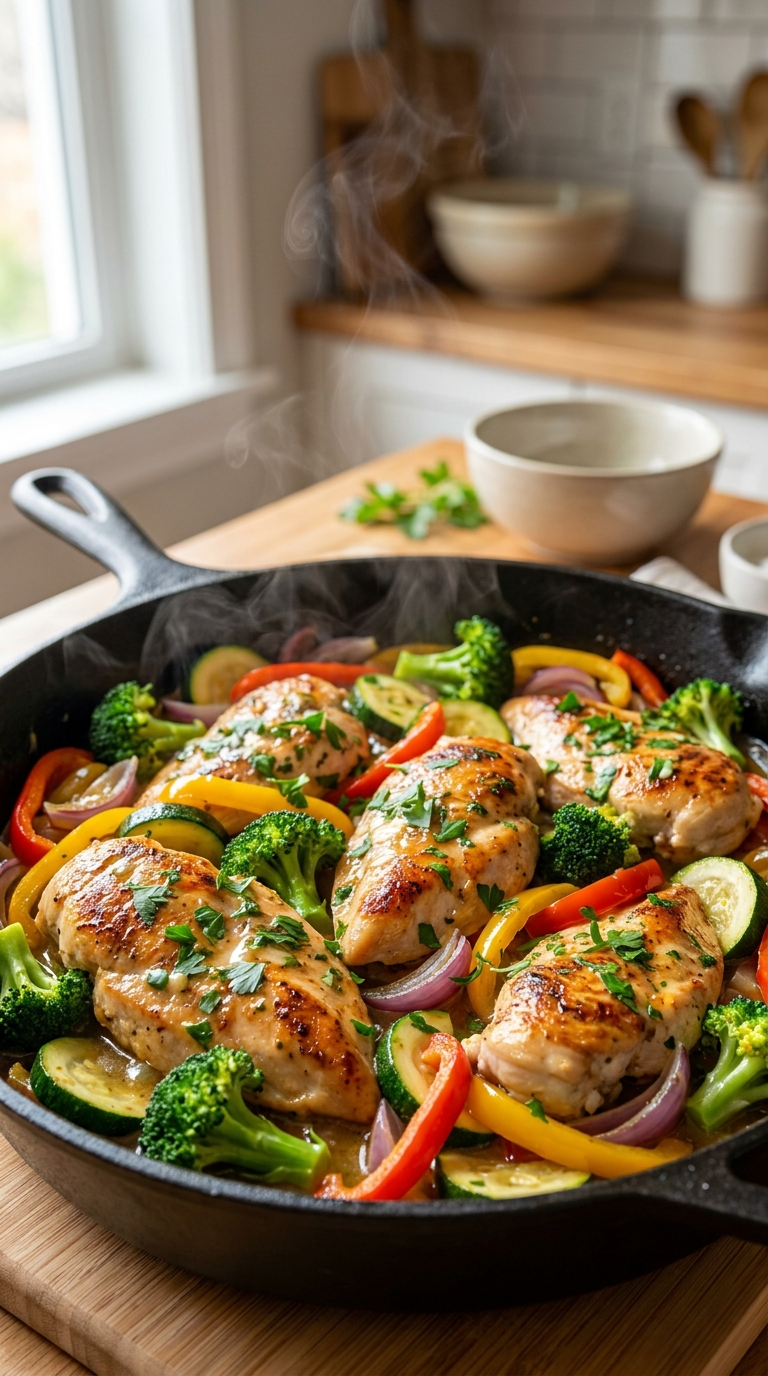
- Quick enough for busy evenings: You can get dinner on the table in about 30–35 minutes.
- Simple ingredients: Most of the ingredients probably already live in your kitchen.
- Plenty of vegetables: Bell peppers, broccoli, and zucchini add color, texture, and flavor.
- Easy to customize: Change the vegetables, seasoning, or sauce depending on what you have.
- Minimal cleanup: One large skillet handles most of the cooking.
I especially love this recipe because it doesn’t require complicated cooking techniques. If you can chop vegetables and safely cook chicken through, you can absolutely make this.
Ingredients List
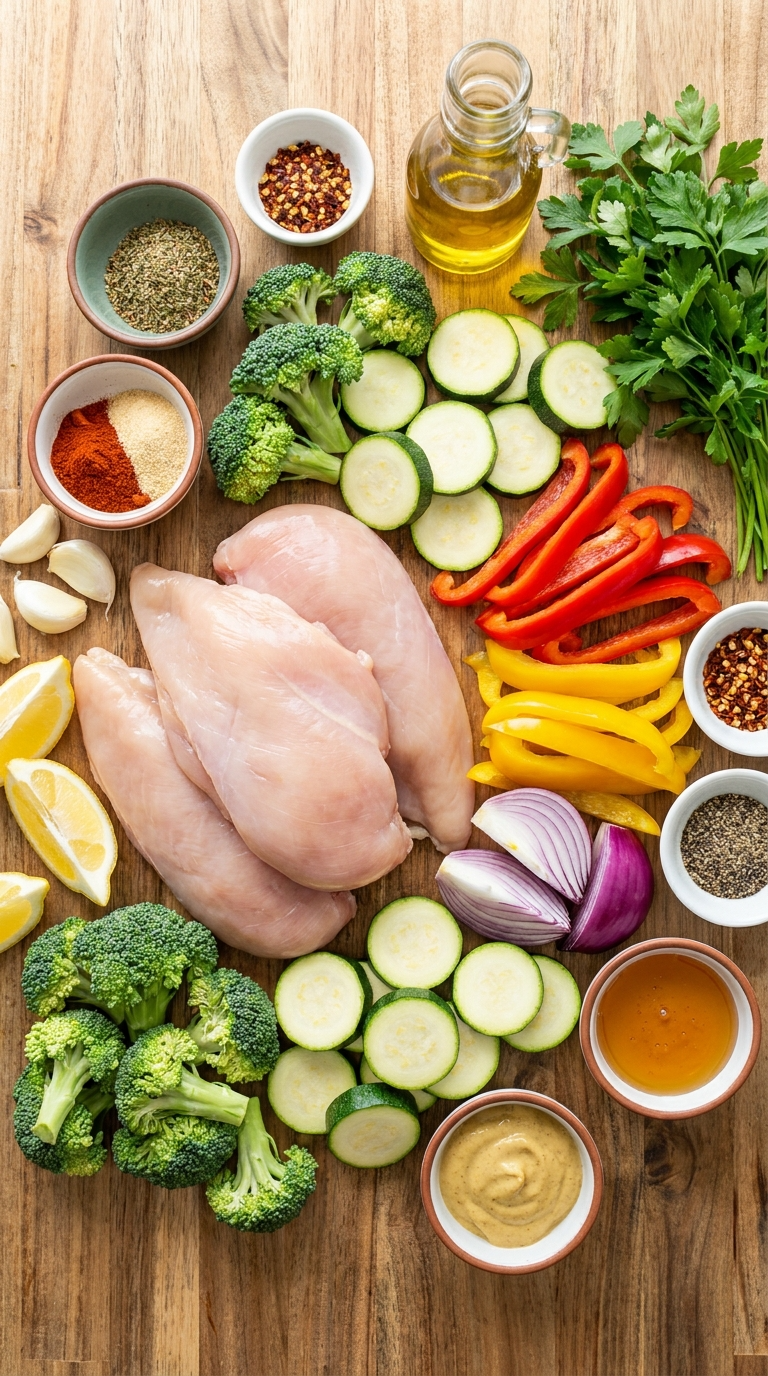
This recipe makes about 4 servings.
For the Chicken
- 1 ½ pounds boneless, skinless chicken breasts
- 1 tablespoon olive oil
- 1 teaspoon paprika
- 1 teaspoon garlic powder
- ½ teaspoon onion powder
- ½ teaspoon dried Italian seasoning
- ½ teaspoon salt
- ¼ teaspoon black pepper
- ½ teaspoon chili flakes, optional
You can replace chicken breasts with boneless, skinless chicken thighs if you prefer darker meat. Thighs stay juicy and work especially well if you tend to worry about overcooking chicken.
For the Vegetables
- 2 cups broccoli florets
- 1 medium zucchini, sliced
- 1 red bell pepper, sliced
- 1 small yellow bell pepper, sliced
- ½ medium red onion, sliced
- 3 cloves garlic, minced
- 1 tablespoon olive oil
Don’t worry if you don’t have every vegetable listed. Carrots, mushrooms, green beans, spinach, or snap peas can all work nicely.
For the Quick Lemon Sauce
- ½ cup low-sodium chicken broth
- 2 tablespoons fresh lemon juice
- 1 teaspoon Dijon mustard
- 1 teaspoon honey
- ½ teaspoon garlic powder
- 1 tablespoon chopped fresh parsley
If you don’t have fresh lemon juice, bottled lemon juice works in a pinch. Fresh lemon simply gives the sauce a brighter flavor.
Optional Garnishes
- Fresh parsley
- Lemon wedges
- A sprinkle of red pepper flakes
- 1 tablespoon grated Parmesan
Step-by-Step Instructions
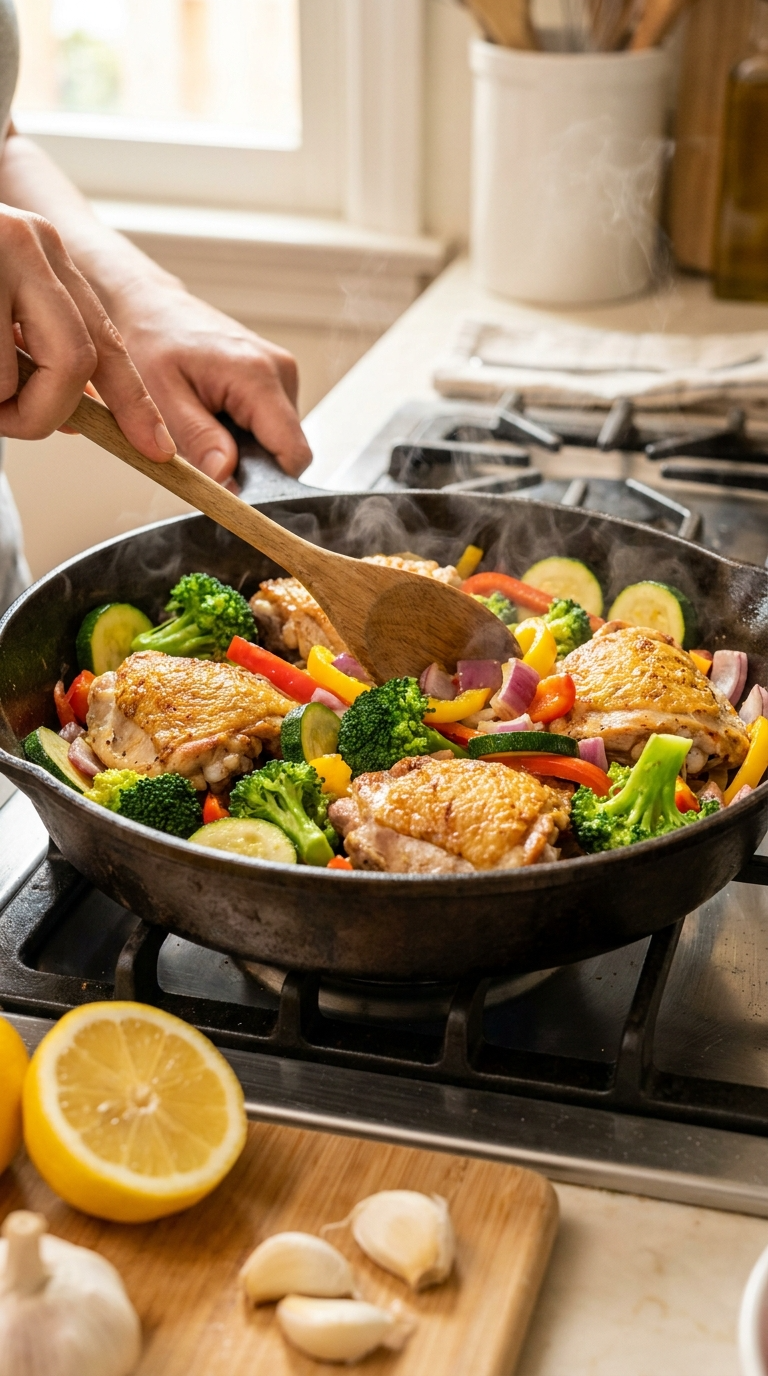
1. Prepare the Chicken — 5 Minutes
Place the chicken breasts on a cutting board and pat them dry with paper towels.
If the breasts vary greatly in thickness, gently pound the thicker portions with a meat mallet until the pieces look more even. You don’t need to flatten them completely. You simply want them to cook at roughly the same rate.
Slice the chicken into bite-sized pieces.
Add the chicken to a bowl and sprinkle it with paprika, garlic powder, onion powder, Italian seasoning, salt, black pepper, and chili flakes if you’re using them.
Toss everything together until the chicken looks evenly coated.
I learned the hard way that skipping this seasoning step creates bland chicken. Even a simple spice mixture makes a huge difference.
2. Mix the Sauce — 2 Minutes
In a small bowl, whisk together the chicken broth, lemon juice, Dijon mustard, honey, and garlic powder.
Give it a quick taste.
You should get a balance of savory, tangy, slightly sweet, and garlicky flavors. Don’t worry if it tastes a little strong at this point. Once it cooks with the chicken and vegetables, the flavors mellow out.
Set the sauce aside.
3. Cook the Chicken — 6–8 Minutes
Heat 1 tablespoon of olive oil in a large skillet over medium heat.
A cast-iron skillet works beautifully, but a regular nonstick or stainless-steel skillet works just as well.
Add the seasoned chicken pieces in a single layer.
Let them cook for about 3–4 minutes without constantly moving them around. When the bottoms turn golden brown, flip them and cook for another 3–4 minutes.
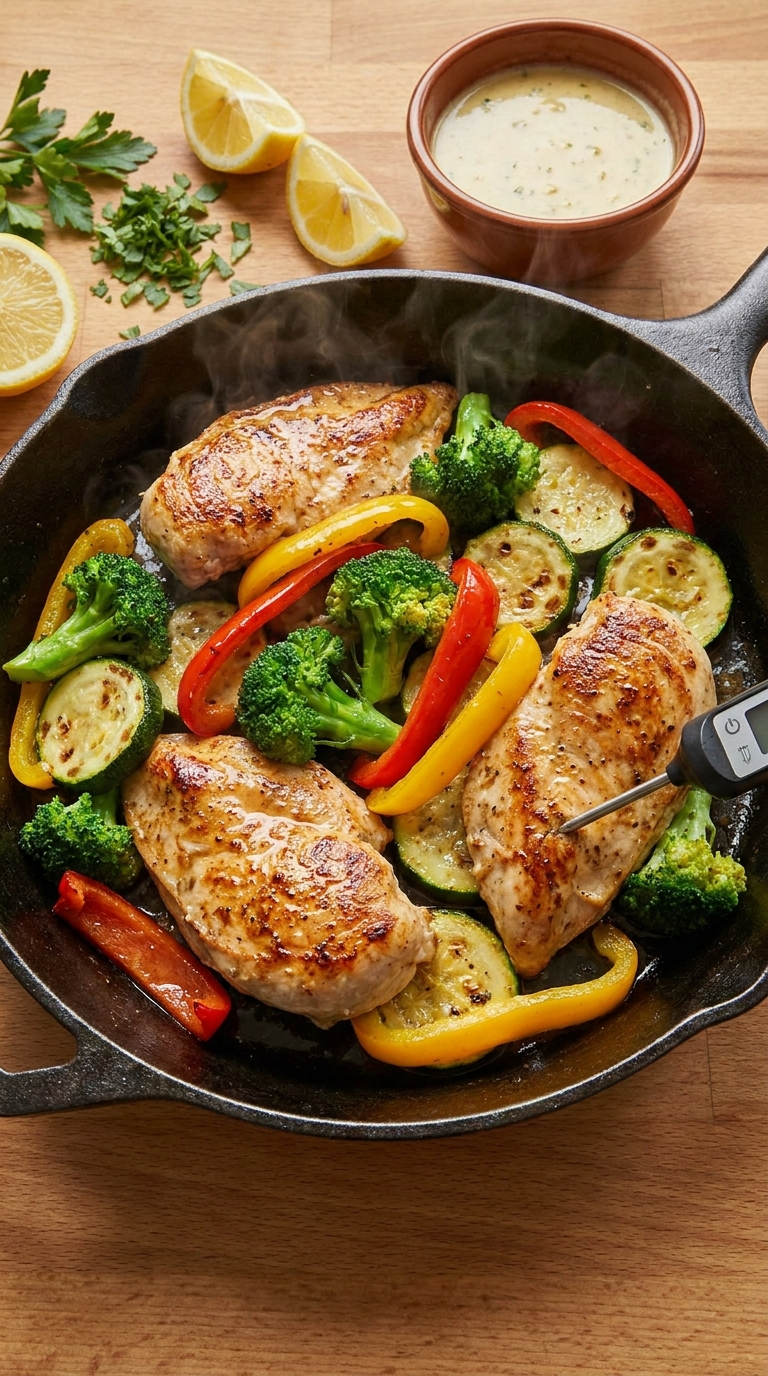
The chicken should reach 165°F (74°C) in the thickest piece.
Don’t rely only on color. A digital instant-read thermometer makes this step much easier, especially when you’re cooking larger pieces.
Transfer the cooked chicken to a clean plate.
4. Cook the Vegetables — 7–9 Minutes
Add another tablespoon of olive oil to the same skillet.
Add the broccoli, bell peppers, zucchini, and red onion.
Cook over medium heat for about 5–7 minutes, stirring occasionally.
You want the vegetables tender but not mushy. The broccoli should soften while still keeping some bite, and the peppers should develop lightly browned edges.
Add the minced garlic during the final minute.
Stir constantly for about 30–60 seconds.
Be careful not to add the garlic too early. Burnt garlic can make the entire dish taste bitter.
5. Bring Everything Together — 3–4 Minutes
Return the cooked chicken to the skillet.
Pour in the lemon sauce.
Stir everything together and let it simmer gently for 2–3 minutes.
The sauce should coat the chicken and vegetables without becoming thick like gravy.
Turn off the heat and sprinkle fresh parsley over everything.
Give the skillet one final taste.
If it needs more brightness, add another small squeeze of lemon. If you like heat, add another pinch of chili flakes.
6. Serve While Hot
Spoon the chicken and vegetables onto plates and finish with lemon wedges.
If you’re serving this with rice, spoon some of the sauce over the rice too. Trust me, leaving that sauce behind in the skillet is a tiny dinner tragedy.
Pro Tips & Tricks
Don’t Overcrowd the Chicken
If you pile too much chicken into a small skillet, the pieces will release moisture and start steaming instead of browning.
Use a large skillet or cook the chicken in two batches.
Cut Everything Around the Same Size
Small, evenly sized chicken pieces cook much more consistently.
The same goes for vegetables. Thin zucchini slices cook much faster than large chunks, so keeping your cuts relatively uniform helps everything finish together.
Use a Meat Thermometer
This is one kitchen tool I recommend to almost everyone.
An instant-read thermometer takes the guesswork out of chicken. Cook the thickest piece until it reaches 165°F (74°C), then remove it from the heat.
Don’t Skip the Resting Time
Let the cooked chicken rest for a few minutes before serving if you’re cooking larger pieces.
This gives the juices time to settle instead of running all over your cutting board.
Store Leftovers Properly
Transfer leftovers to an airtight container and refrigerate them within two hours of cooking.
They should keep well in the refrigerator for about 3–4 days.
For meal prep, divide the chicken and vegetables into individual containers so you can grab one for lunch without doing any extra work.
Reheat Gently
Chicken can become tough when you blast it with high heat.
Reheat leftovers in a skillet over medium-low heat with a tablespoon or two of water or broth. Cover the skillet for a few minutes to help the chicken warm through without drying out.
You can also use a microwave. Cover the container loosely and heat in short intervals, stirring between each one.
Variations & Substitutions
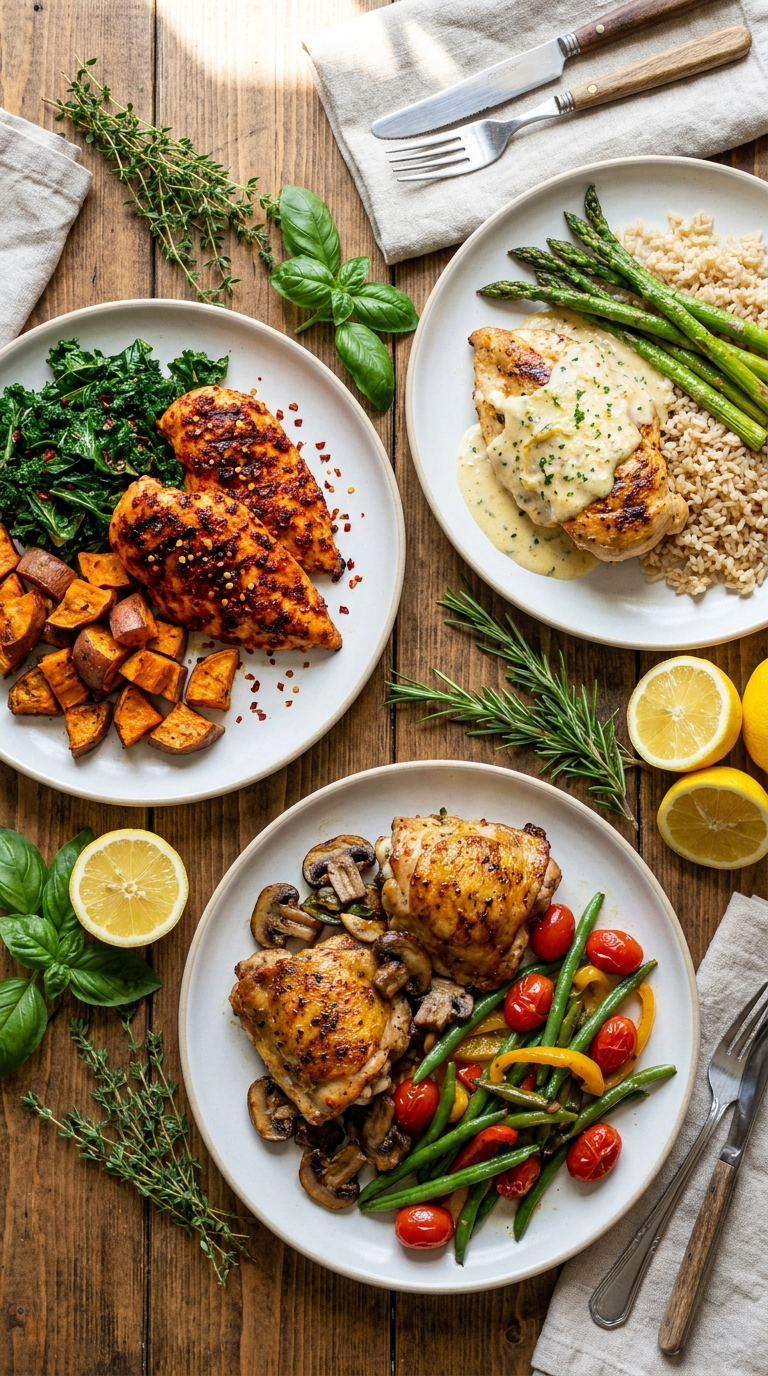
The best thing about easy chicken dinner recipes is how easily you can change them.
Make It Spicier
Add extra chili flakes, cayenne pepper, or a spoonful of your favorite hot sauce to the lemon sauce.
You can also season the chicken with smoked paprika instead of regular paprika for a deeper flavor.
Use Different Vegetables
This recipe doesn’t require a strict vegetable shopping list.
Try mushrooms, green beans, carrots, asparagus, spinach, cauliflower, or sugar snap peas.
Harder vegetables such as carrots need more cooking time, so add them earlier. Tender vegetables such as spinach should go in near the end.
Make It Creamy
For a richer version, stir 2–3 tablespoons of plain Greek yogurt into the sauce after removing the skillet from the heat.
Don’t boil the yogurt or it can separate.
You can also add a small amount of grated Parmesan for a creamy, savory finish.
Swap the Chicken
Boneless chicken thighs work wonderfully here.
You can also use leftover cooked chicken, although you should add it toward the end so it doesn’t become dry.
For a vegetarian version, replace the chicken with chickpeas, white beans, or extra mushrooms and vegetables.
Serving Suggestions
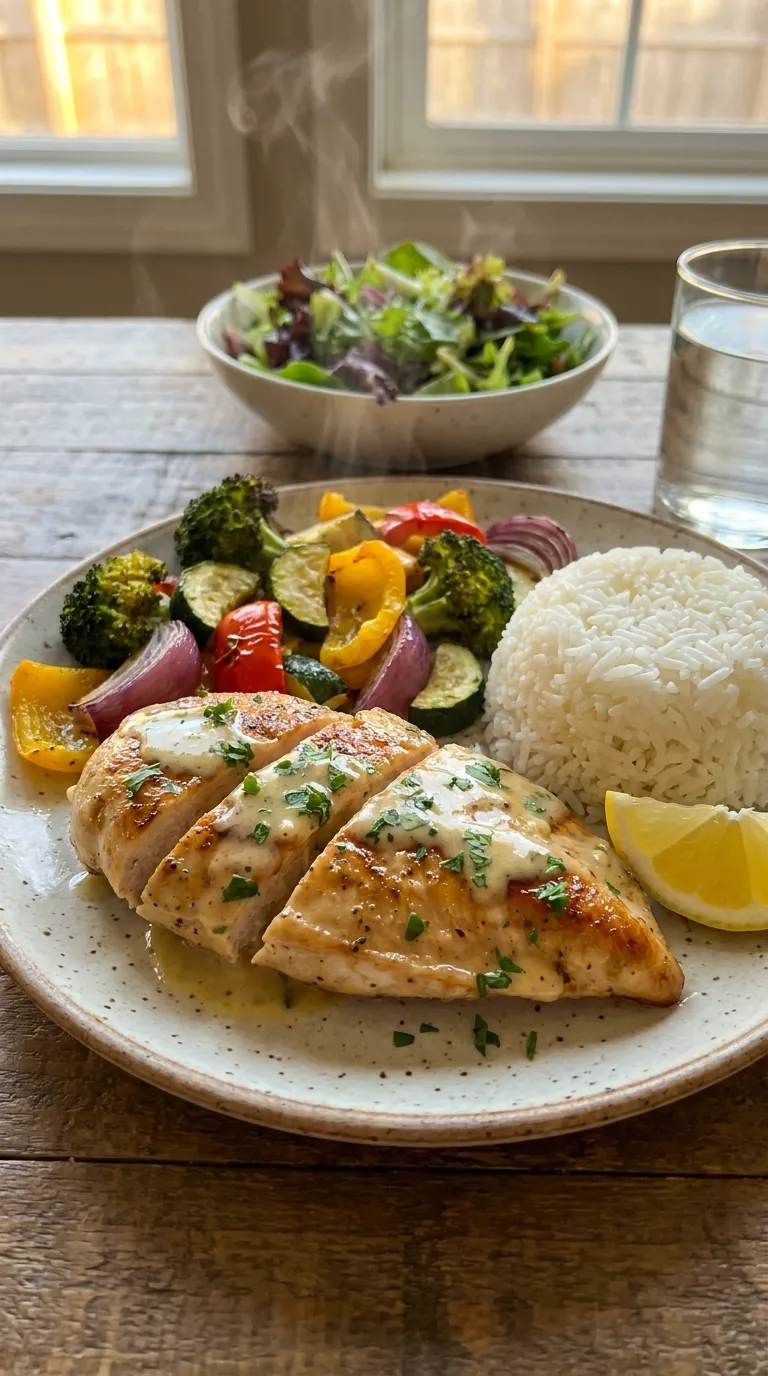
I usually serve this chicken dinner over fluffy brown rice or white rice because the grains soak up the lemony sauce.
Quinoa works well too if you want something with a slightly nutty flavor.
For a lower-effort dinner, serve the chicken and vegetables on their own with a simple green salad.
A baked potato also makes a surprisingly good companion.
If you’re preparing dinner for guests, arrange the chicken and vegetables on a large serving platter, drizzle the sauce over the top, and scatter fresh parsley around the edges.
For a family dinner, keep the toppings on the table and let everyone customize their own plate. Kids can skip the chili flakes while adults can add extra lemon or hot sauce.
This also makes a practical meal-prep option. Divide the cooked chicken, vegetables, and rice into four containers, then refrigerate them for quick lunches during the week.
FAQ’s
Can I use frozen vegetables?
Yes. Frozen broccoli, peppers, or mixed vegetables can work.
Don’t thaw them first unless the package instructions recommend it. Add them directly to the skillet and allow a little extra cooking time.
Keep in mind that frozen vegetables may release more moisture, so you might not get quite as much browning.
Can I prepare the chicken ahead of time?
Absolutely.
You can season and cut the raw chicken several hours ahead and keep it covered in the refrigerator until you’re ready to cook.
You can also prepare the sauce earlier in the day and refrigerate it in a sealed container.
I like doing both before a busy evening because the actual cooking feels almost ridiculously easy afterward.
How long does cooked chicken last in the refrigerator?
Cooked chicken leftovers generally keep for 3–4 days when refrigerated promptly in a properly sealed container.
If the food has sat at room temperature for an extended period, don’t try to rescue it by reheating. When in doubt, throw it out.
Can I freeze this chicken dinner?
Yes, although the vegetables may soften after freezing and thawing.
For the best texture, freeze the cooked chicken separately from delicate vegetables when possible.
Store everything in airtight freezer-safe containers and label them with the date.
Thaw leftovers in the refrigerator before reheating.
Why did my chicken turn out dry?
The most common reason is overcooking.
Chicken breast has very little fat, so it can quickly become dry when you cook it far beyond the temperature needed for doneness.
Cutting the chicken into evenly sized pieces and using an instant-read thermometer can help tremendously.
Can I make this recipe without a skillet?
Yes.
You can roast the chicken and vegetables on a large sheet pan instead.
Toss the chicken and vegetables with olive oil and seasonings, spread everything into a single layer, and roast at around 425°F (220°C) until the chicken reaches 165°F (74°C).
Prepare the lemon sauce separately and drizzle it over the cooked meal.
Closing / Final Thoughts
I’ve made plenty of complicated chicken dinners over the years, but I keep coming back to simple recipes like this one.
The chicken gets golden and flavorful, the vegetables stay colorful and crisp-tender, and the lemon sauce pulls everything together without making the kitchen feel like a restaurant prep station.
And that’s really what I want from a weeknight dinner.
I want food that tastes homemade, doesn’t require a grocery cart full of unusual ingredients, and doesn’t leave me staring at a mountain of dishes afterward.
So grab that chicken from the fridge, chop up whatever vegetables are hanging around, and give this easy dinner a try.
And if you change the recipe along the way, that’s perfectly fine. Some of my favorite dinners started with me realizing I was missing half the ingredients and deciding to improvise anyway.