
I’ll admit it: boneless chicken breasts have betrayed me before.
I’ve pulled them from the oven only to discover they looked beautifully golden on the outside and somehow had the texture of a kitchen sponge inside. I’ve also forgotten about a skillet of chicken while answering a phone call, then wondered why dinner suddenly smelled like regret.
After making boneless chicken breast recipes more times than I can count, I finally learned the trick: chicken breast doesn’t need complicated cooking. It needs the right timing, enough seasoning, and a little attention.
One of my favorite ways to cook it starts with a simple garlic-and-herb seasoning, a hot skillet, and a quick pan sauce. The chicken stays juicy, the edges turn golden, and the whole kitchen smells like I actually knew what I was doing all along.
That basic method has saved me on countless busy evenings. I’ve served the chicken with rice, tucked slices into wraps, piled it over salads, and even chopped leftovers into sandwiches the next day.
That’s why I keep coming back to easy boneless chicken breast recipes. You can change the seasonings and sides depending on what you have, but the basic method stays wonderfully simple.
Why You’ll Love This Recipe
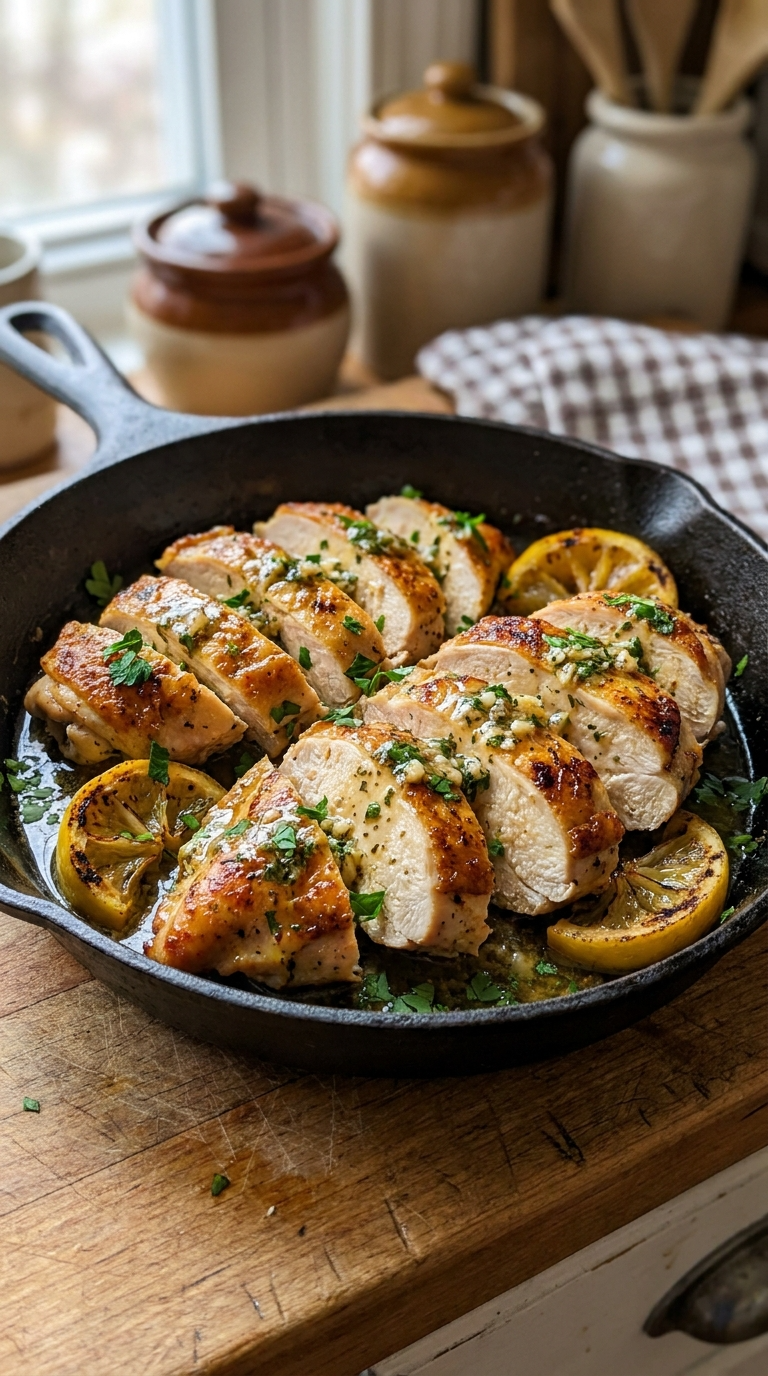
- It keeps dinner simple. You don’t need a long ingredient list or fancy cooking skills.
- It cooks quickly. Thin chicken breasts can reach the table in around 25–30 minutes.
- It works with almost anything. Serve it with rice, pasta, vegetables, potatoes, salad, or warm bread.
- It makes great leftovers. Slice extra chicken for wraps, sandwiches, salads, and meal prep.
- You can change the flavor easily. A few different spices can turn the same chicken into several completely different meals.
The biggest reason I love this approach? It gives you a reliable starting point without locking you into one flavor. If your spice cabinet looks like mine, you probably have enough seasonings to reinvent this chicken every week.
Ingredients
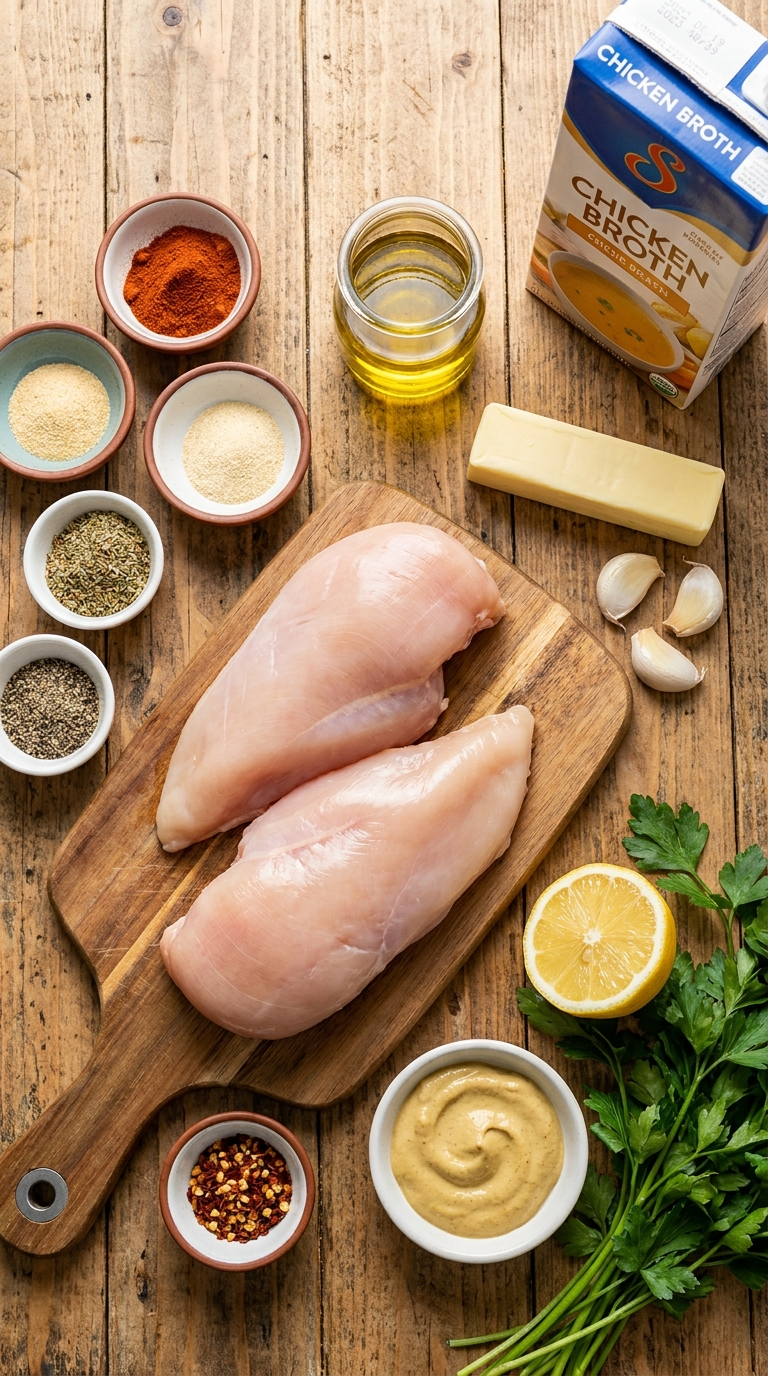
This simple skillet version makes about 4 servings.
For the Chicken
- 4 boneless, skinless chicken breasts, about 6 ounces each
- 2 tablespoons olive oil
- 1 teaspoon kosher salt
- 1 teaspoon paprika
- 1 teaspoon garlic powder
- ½ teaspoon onion powder
- ½ teaspoon dried Italian seasoning
- ½ teaspoon black pepper
- ¼ teaspoon chili flakes, optional
- 1 tablespoon unsalted butter
For the Quick Pan Sauce
- 3 garlic cloves, finely minced
- ½ cup low-sodium chicken broth
- 1 tablespoon fresh lemon juice
- 1 teaspoon Dijon mustard
- 1 tablespoon chopped fresh parsley
Optional Add-Ins
You can add ½ teaspoon smoked paprika for a deeper flavor or a pinch of cayenne if you enjoy spicy chicken.
If you don’t have Italian seasoning, use a mixture of dried oregano and dried basil. No fresh parsley? Dried parsley works in a pinch, although fresh parsley gives the finished dish a brighter flavor.
For the chicken breasts, look for pieces that have a similar thickness. If one breast looks much thicker than the others, gently pound it with a meat mallet until it reaches a more even thickness.
That little step makes a surprisingly big difference.
Step-by-Step Instructions
1. Prepare the Chicken — 5 Minutes
Pat the chicken breasts dry with paper towels.
This sounds like a tiny detail, but I learned the hard way that wet chicken doesn’t brown as nicely. You want the surface dry before it meets the hot pan.
If the breasts have uneven thick sections, place each one between two pieces of parchment paper or plastic wrap and gently pound the thickest parts with a meat mallet.
Aim for roughly ¾-inch thickness.
Don’t pulverize the chicken. You’re just evening it out so the thinner edges don’t finish cooking long before the center.
2. Season Generously — 2 Minutes
Mix the salt, paprika, garlic powder, onion powder, Italian seasoning, black pepper, and chili flakes in a small bowl.
Rub the mixture over both sides of each chicken breast.
Let the seasoned chicken sit for about 5 minutes while you heat the skillet.
This gives the seasoning a chance to cling to the surface instead of falling onto the bottom of the pan.
3. Heat the Skillet — 2 to 3 Minutes
Place a large skillet over medium-high heat.
I usually reach for a cast-iron skillet because it holds heat beautifully, but a heavy stainless-steel or nonstick skillet also works.
Add the olive oil.
The oil should look glossy and move easily across the pan. If it starts smoking heavily, your pan has gotten too hot, so reduce the heat slightly.
4. Sear the Chicken — 4 to 5 Minutes Per Side
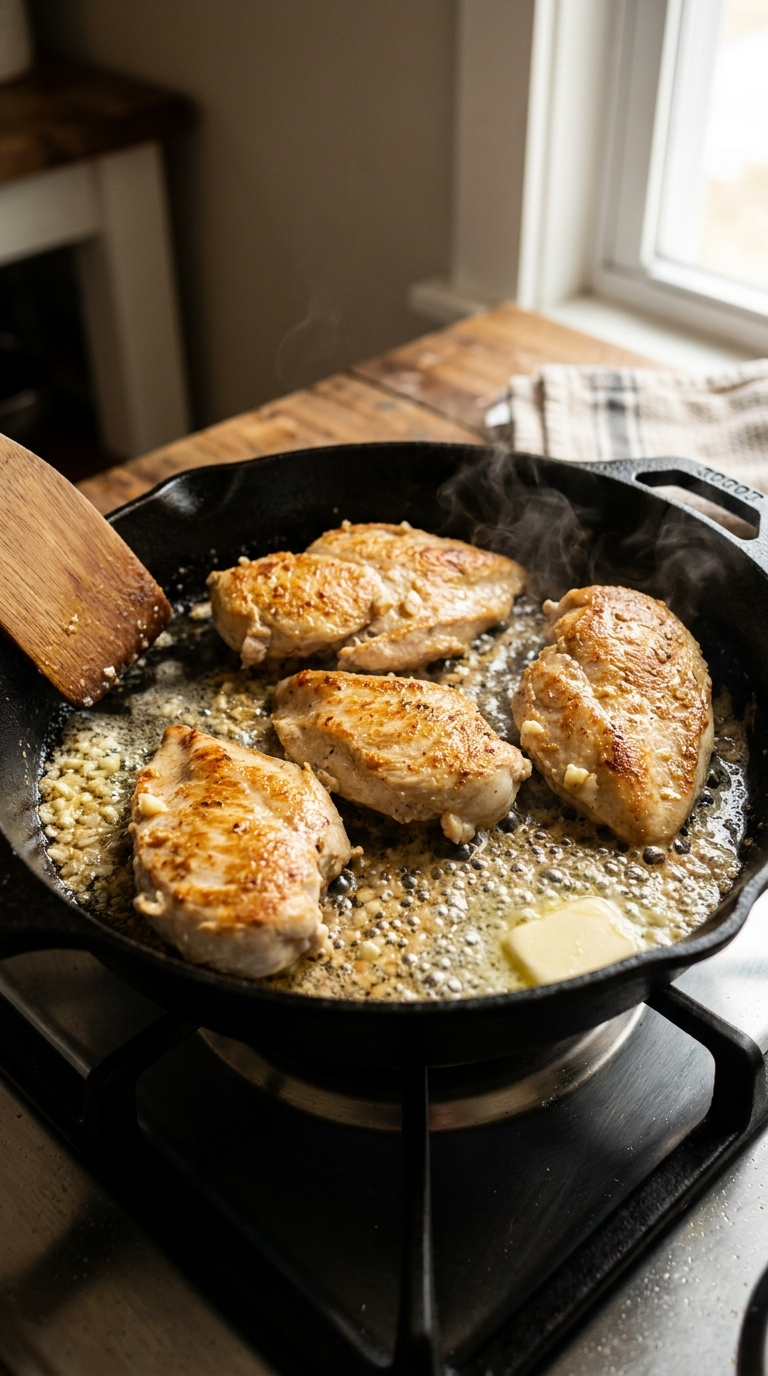
Place the chicken into the hot skillet in a single layer.
You should hear a confident sizzle when the chicken touches the pan. If you hear absolutely nothing, give the skillet another minute to heat.
Cook the chicken for about 4–5 minutes on the first side without constantly moving it.
This helps the surface develop a golden-brown crust.
Flip the chicken and cook for another 4–5 minutes, depending on thickness.
Add the butter during the final couple of minutes and spoon the melted butter over the chicken.
Your chicken should look golden on the outside rather than pale and gray.
5. Check the Temperature — 1 Minute
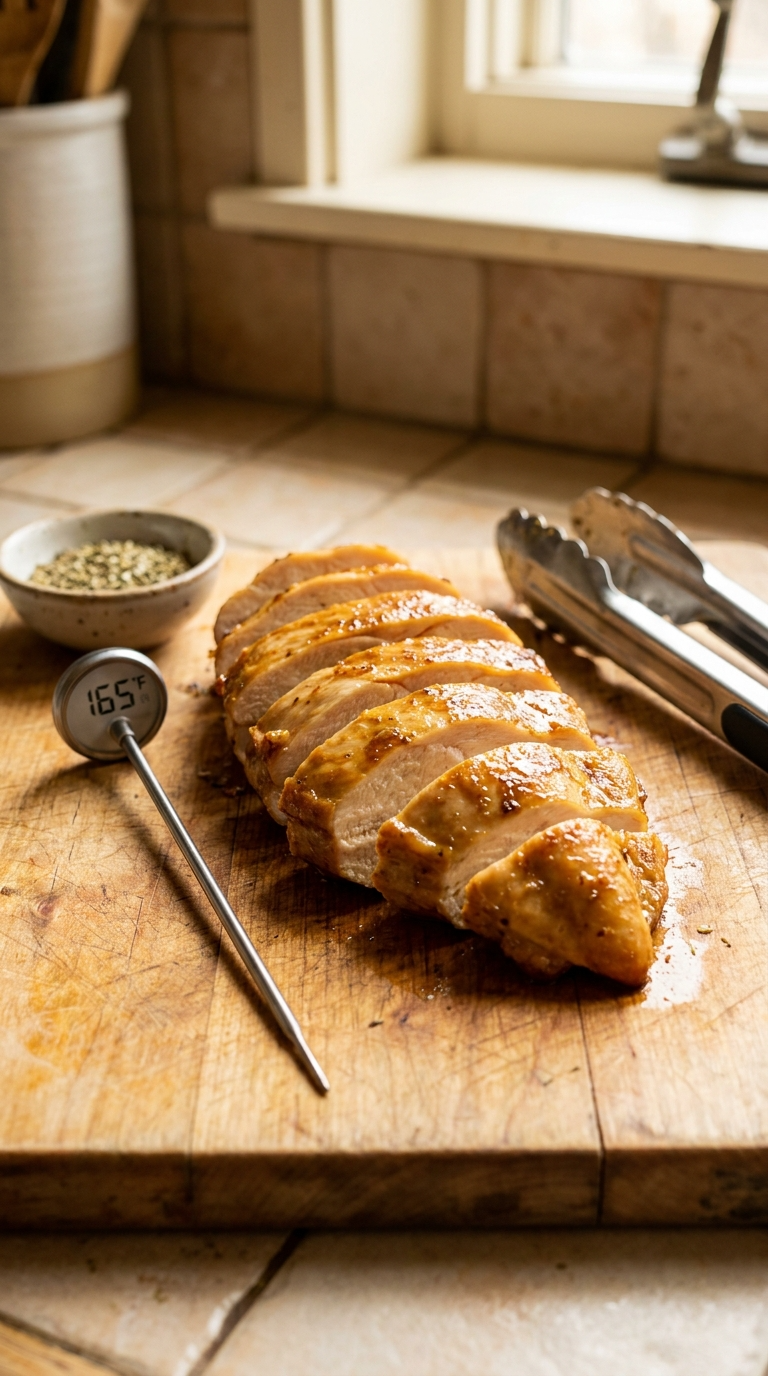
This is where I strongly recommend using an instant-read thermometer.
Insert it into the thickest part of the chicken. The center should reach 165°F (74°C) for safe consumption.
Don’t rely only on cutting the chicken open to check it. Every time you cut into the meat, you lose some of those flavorful juices.
A thermometer takes seconds and removes the guesswork.
6. Make the Garlic Pan Sauce — 3 to 4 Minutes
Transfer the cooked chicken to a clean plate and loosely cover it with foil.
Keep the skillet over medium heat.
Add the minced garlic to the remaining butter and oil. Cook for about 30 seconds, stirring constantly.
You want the garlic fragrant, not brown.
Pour in the chicken broth and scrape the bottom of the pan with a wooden spoon. Those browned bits contain loads of flavor.
Stir in the lemon juice and Dijon mustard.
Let everything simmer for 2–3 minutes, until the sauce reduces slightly.
7. Finish and Rest — 5 Minutes
Return the chicken to the skillet and spoon some of the sauce over each piece.
Turn off the heat and let the chicken rest for about 5 minutes.
I know waiting feels unnecessary when dinner smells this good, but resting helps the juices settle back into the meat.
Finish with fresh parsley and another small squeeze of lemon if you like.
Then grab your fork.
Pro Tips & Tricks
Don’t Skip the Drying Step
Patting the chicken dry gives the seasonings a better surface to cling to and helps the chicken brown instead of steaming.
Pound Thick Chicken Breasts Evenly
Uneven chicken causes one end to dry out while the thickest part finishes cooking.
A quick, gentle pounding creates a much more even cooking time.
Don’t Keep Flipping the Chicken
I used to flip chicken constantly because I thought I was helping it cook evenly.
I wasn’t.
Give the chicken time to develop color on one side before flipping. One flip usually does the job.
Use a Meat Thermometer
This remains my favorite chicken-cooking shortcut.
Instead of guessing whether the center has cooked through, check the thickest part with an instant-read thermometer.
Let It Rest
Give cooked chicken about 5 minutes before slicing.
That short rest makes the chicken noticeably juicier.
Store Leftovers Properly
Place cooled chicken in an airtight container and refrigerate it within 2 hours of cooking.
Use refrigerated leftovers within 3–4 days.
For meal prep, slice the chicken only when you plan to use it. Keeping the pieces larger can help them retain moisture.
Variations & Substitutions
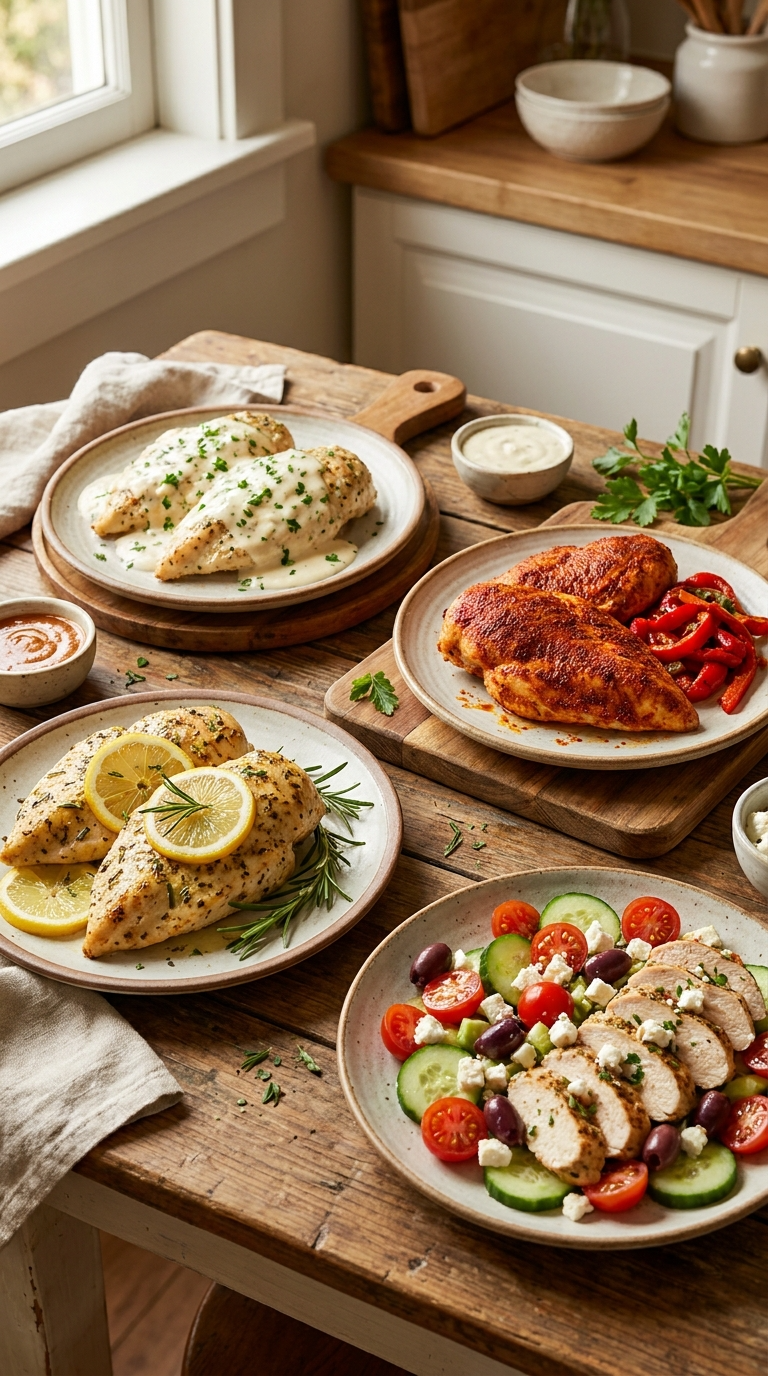
Creamy Garlic Chicken
For a richer dinner, add ½ cup heavy cream after reducing the chicken broth. Simmer gently until the sauce thickens.
A handful of grated Parmesan also works beautifully here.
Serve it over pasta, mashed potatoes, or rice.
Spicy Cajun Chicken
Replace the Italian seasoning with 1½ teaspoons Cajun seasoning and add a pinch of cayenne.
Sear the chicken exactly the same way.
Serve it with rice and sautéed peppers for a simple spicy dinner.
Lemon Herb Chicken
Skip the chili flakes and increase the lemon flavor.
Add 1 teaspoon lemon zest to the seasoning and finish the chicken with extra lemon juice and fresh parsley.
This version tastes especially good with roasted potatoes and green beans.
Mediterranean-Style Chicken
Season the chicken with oregano, garlic powder, paprika, black pepper, and a little salt.
After cooking, serve it with cucumber, tomato, olives, feta, and warm pita.
You can also slice the chicken and turn everything into a quick wrap.
Serving Suggestions
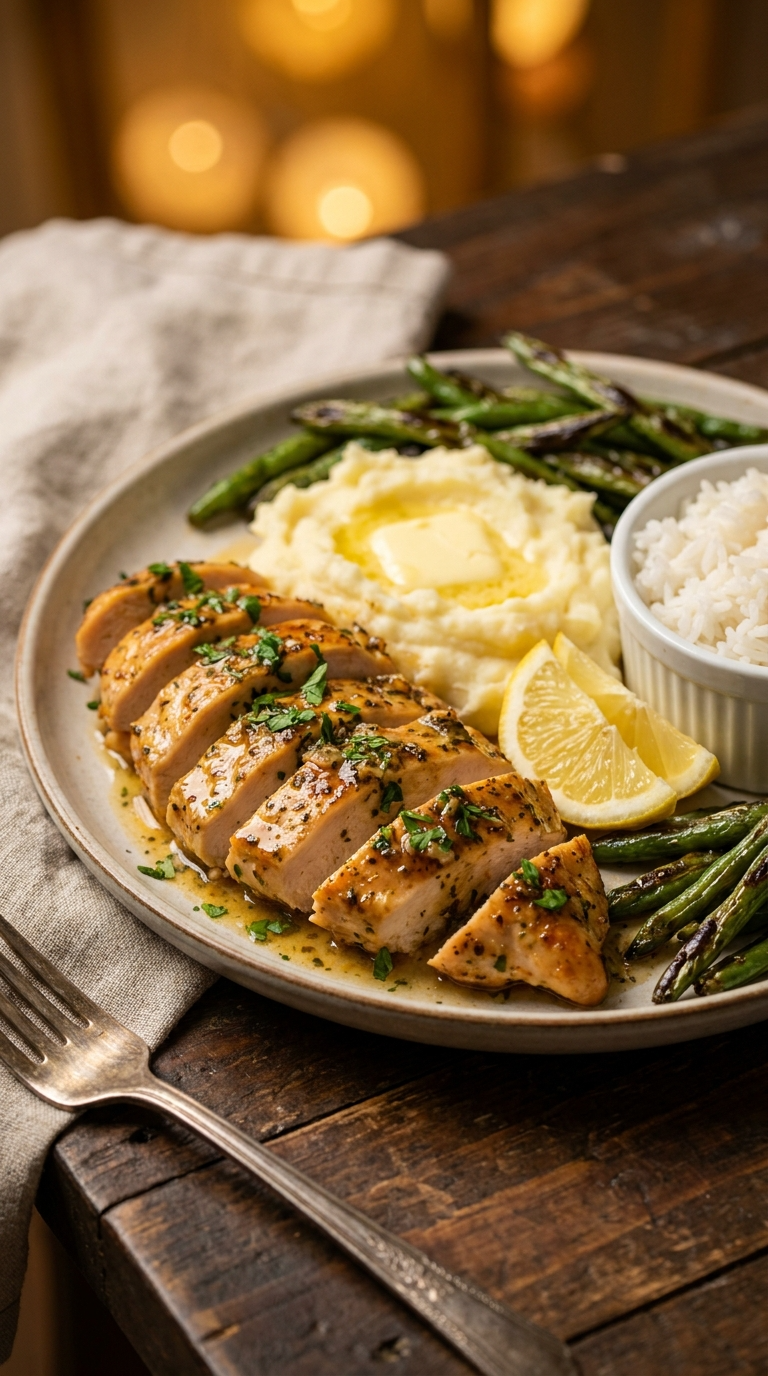
This chicken fits into almost any dinner situation.
For a classic plate, serve it with mashed potatoes and roasted green beans. Spoon the garlic pan sauce over the potatoes and chicken, because wasting that sauce would be a tiny dinner crime.
For a lighter meal, slice the chicken over a big salad with cucumber, tomatoes, lettuce, red onion, and a simple lemon dressing.
Rice also works beautifully. Try plain steamed rice, garlic rice, or rice cooked with a little chicken broth.
If you need something extremely easy, serve the chicken with microwaveable rice and frozen vegetables. There’s absolutely nothing wrong with taking a shortcut when you’re hungry.
For sandwiches and wraps, let the chicken cool slightly before slicing it thinly. Add lettuce, tomato, cheese, and a spoonful of your favorite sauce.
This recipe also works well for weekday meal prep. Cook several chicken breasts at once, cool them properly, and portion them with your favorite sides.
FAQ’s
How long do boneless chicken breasts take to cook?
Cooking time depends on thickness and the cooking method. Thin chicken breasts can take around 4–5 minutes per side in a skillet, while thicker pieces may need longer.
Always check the thickest part with an instant-read thermometer and cook until it reaches 165°F (74°C).
Why does my chicken breast turn out dry?
Overcooking usually causes dry chicken breast.
Uneven thickness can also create problems because the thinner sections finish cooking before the thickest section.
Pounding the chicken evenly and using a thermometer can help you avoid both issues.
Can I prepare the chicken ahead of time?
Absolutely.
You can season the chicken several hours ahead and keep it covered in the refrigerator until you’re ready to cook.
You can also cook the chicken ahead, refrigerate it, and use it in salads, wraps, sandwiches, pasta, or rice bowls throughout the week.
Can I freeze cooked boneless chicken breast?
Yes.
Allow the cooked chicken to cool, then place it in an airtight freezer-safe container or freezer bag.
For the best quality, use frozen cooked chicken within about 2–3 months.
Thaw it safely in the refrigerator before reheating.
What is the best way to reheat chicken breast?
Reheat it gently so it doesn’t dry out.
For skillet reheating, add a splash of chicken broth or water, cover the pan, and warm the chicken over medium-low heat until heated through.
You can also microwave it in short intervals with a little broth or sauce.
Can I use chicken thighs instead?
Definitely.
Boneless chicken thighs have more fat than chicken breasts, so they stay juicy and bring a richer flavor.
Adjust the cooking time based on thickness and check the internal temperature before serving.
Closing / Final Thoughts
After making boneless chicken breast recipes over and over again, I’ve learned that good chicken doesn’t require a complicated recipe.
A few simple seasonings, a hot skillet, a little butter, and a thermometer can turn an ordinary package of chicken into a dinner that feels surprisingly special.
And the best part is how flexible it is.
Make it garlicky tonight. Add some heat tomorrow. Turn the leftovers into wraps on Wednesday. Put slices over a salad when you’re craving something lighter.
That’s exactly why this chicken has earned a permanent spot in my kitchen.
Give it a try, make the seasoning your own, and don’t be afraid to experiment. Sometimes the best recipes start with opening the refrigerator, seeing what you have, and thinking, “Well…let’s see what happens.”
If you make these easy boneless chicken breast recipes, I’d love to hear what you served alongside them or which variation became your favorite.