
There are nights when I open the fridge, stare at the chicken, and think, “Okay, what can I possibly make with this before everyone gets hungry?” I’ve had plenty of those nights.
Over time, I started building a little collection of easy chicken recipes for busy weeknights that I can make without turning dinner into a three-hour project. These recipes rely on simple ingredients, straightforward cooking methods, and plenty of flavor.
My favorite thing about weeknight chicken is how forgiving it can be. A good skillet, a few pantry staples, and some fresh vegetables can turn basic chicken into a dinner that feels like you actually planned ahead.
I learned one particularly useful trick after serving dry chicken more times than I care to admit: don’t rush the cooking, and don’t keep flipping the chicken every thirty seconds. Let it develop a golden crust, then finish it gently. That small change made a huge difference in my kitchen.
So, if your weeknights feel chaotic but you still want a homemade dinner, these ideas are exactly the kind of recipes I reach for.
Why You’ll Love These Easy Chicken Recipes
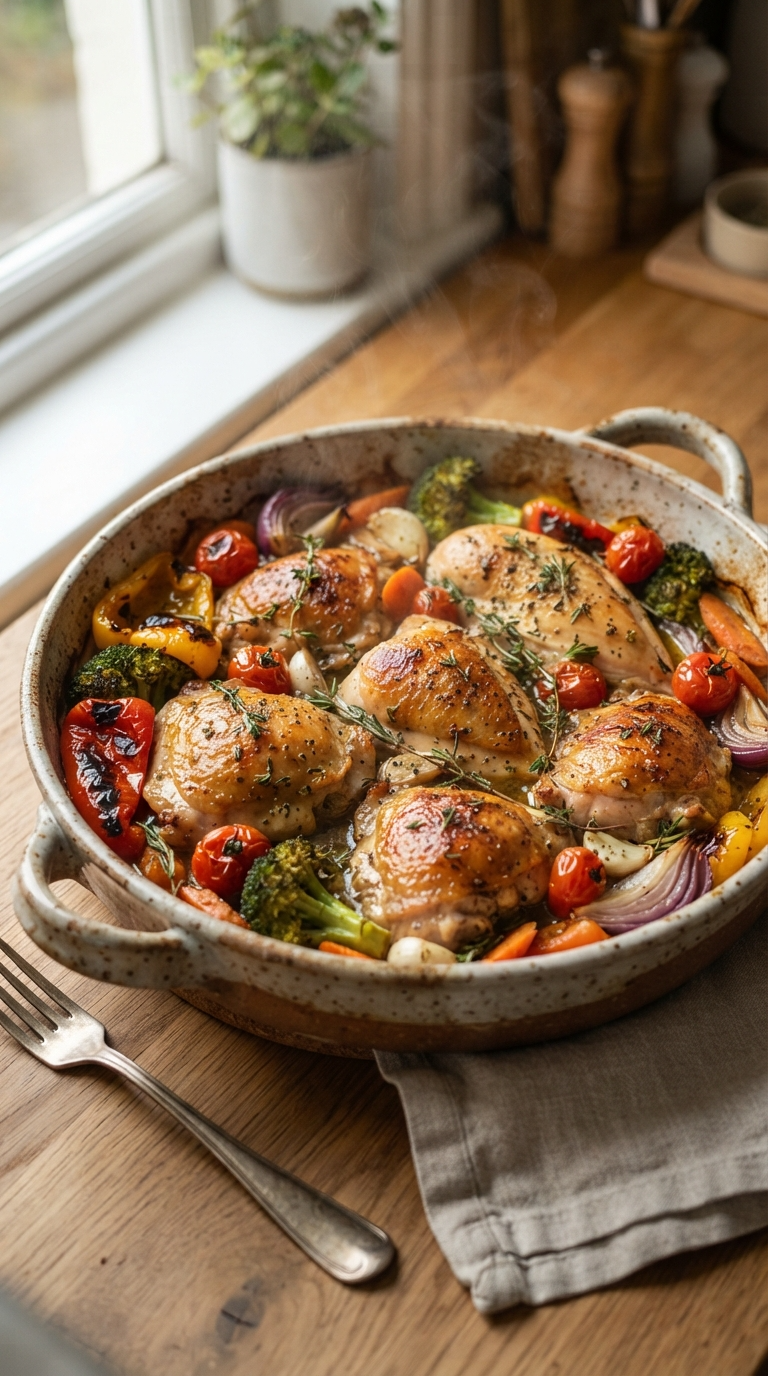
- Quick enough for weeknights: Most of these meals come together in about 30–40 minutes.
- Simple ingredients: You won’t need a specialty grocery-store scavenger hunt.
- Family-friendly: Mild flavors make them easy to serve to picky eaters.
- Flexible: Swap vegetables, herbs, sauces, or chicken cuts based on what you have.
- Minimal cleanup: A skillet or sheet pan can handle most of the work.
- Great for leftovers: Cook extra chicken and turn tomorrow’s lunch into something completely different.
Ingredients List
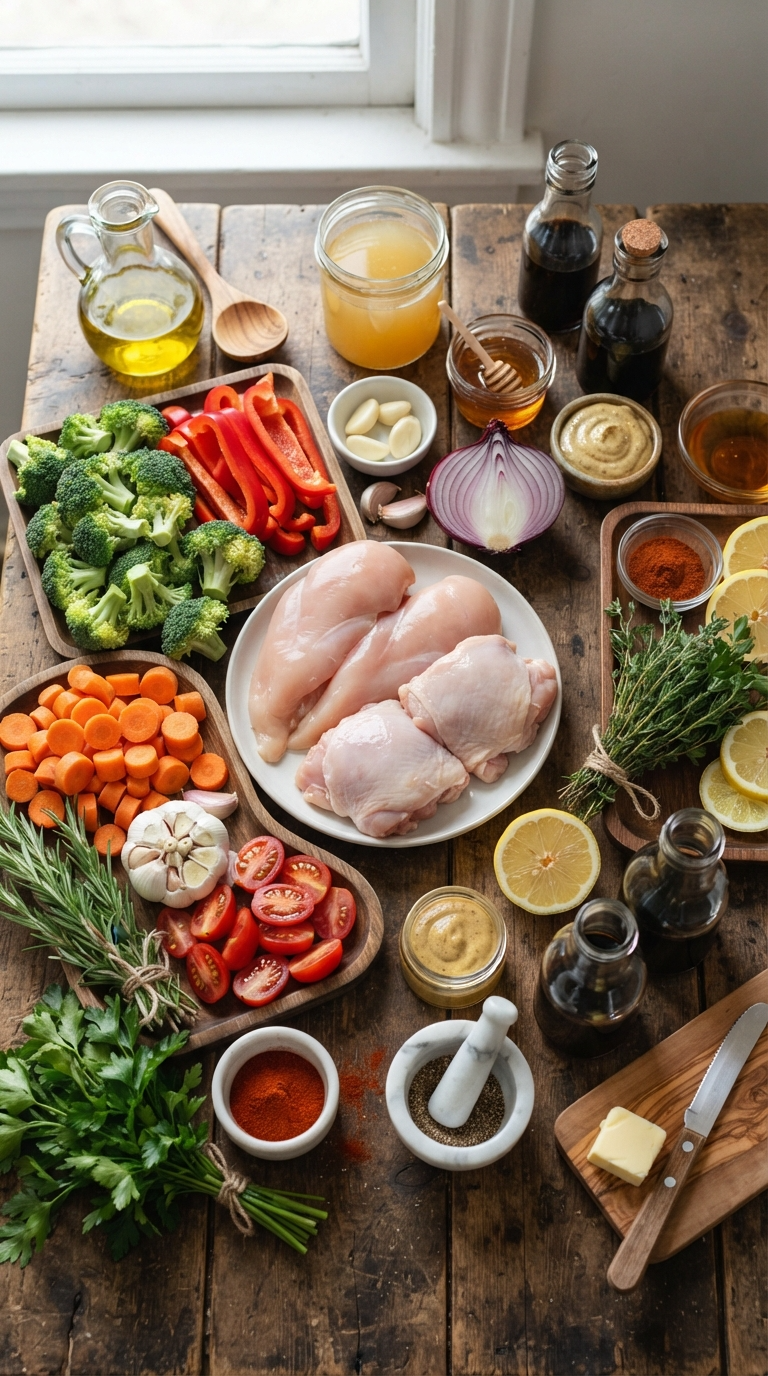
Since this collection includes several chicken dinner ideas, I keep a handful of basic ingredients around. You can mix and match them depending on the recipe you choose.
Chicken
- 2 pounds boneless, skinless chicken breasts
- 2 pounds boneless, skinless chicken thighs
- 1 teaspoon salt
- ½ teaspoon black pepper
- 1 teaspoon paprika
- 1 teaspoon garlic powder
- ½ teaspoon onion powder
- 2 tablespoons olive oil
Chicken breasts work beautifully when you want lean, quick-cooking meat. Chicken thighs stay juicier and bring a little more flavor, especially in skillet recipes.
Vegetables
- 1 large onion, sliced
- 3 bell peppers, sliced
- 2 cups broccoli florets
- 2 medium carrots, thinly sliced
- 2 cups baby spinach
- 1 cup cherry tomatoes
- 2 cloves garlic, minced
You can absolutely use frozen vegetables when fresh ones aren’t available. I often do this on especially busy evenings.
Pantry and Sauce Ingredients
- ½ cup chicken broth
- 2 tablespoons soy sauce
- 1 tablespoon honey
- 1 tablespoon Dijon mustard
- 1 tablespoon lemon juice
- ½ teaspoon dried Italian seasoning
- ½ teaspoon red pepper flakes, optional
- 2 tablespoons butter
- ½ cup shredded mozzarella or cheddar, optional
- 2 cups cooked rice, pasta, or quinoa for serving
Keep these ingredients flexible. If a recipe calls for chicken broth and you only have water plus a little extra seasoning, make the swap. Dinner doesn’t need to become a crisis because the pantry forgot to cooperate.
Step-by-Step Instructions
1. Choose the Right Chicken
For fast cooking, cut chicken breasts into thin cutlets or bite-size pieces.
If you’re using whole chicken breasts, place them between two sheets of parchment paper and gently pound them to an even thickness. I use the flat side of a meat mallet, but a small heavy skillet can work too.
An even thickness helps the chicken cook at the same rate instead of leaving you with a dry edge and a suspiciously undercooked center.
2. Season Generously
Pat the chicken dry with paper towels.
Season both sides with salt, black pepper, paprika, garlic powder, and onion powder.
Don’t skip the drying step. I used to think it didn’t matter much, but dry chicken browns much better than wet chicken.
Let the seasoned chicken sit for about 5 minutes while you prepare the pan.
3. Heat Your Skillet
Place a large skillet over medium-high heat and add 1 tablespoon of olive oil.
Give the pan about 2 minutes to heat.
You want the oil to shimmer slightly but not smoke heavily. If the pan smokes immediately, turn the heat down a little.
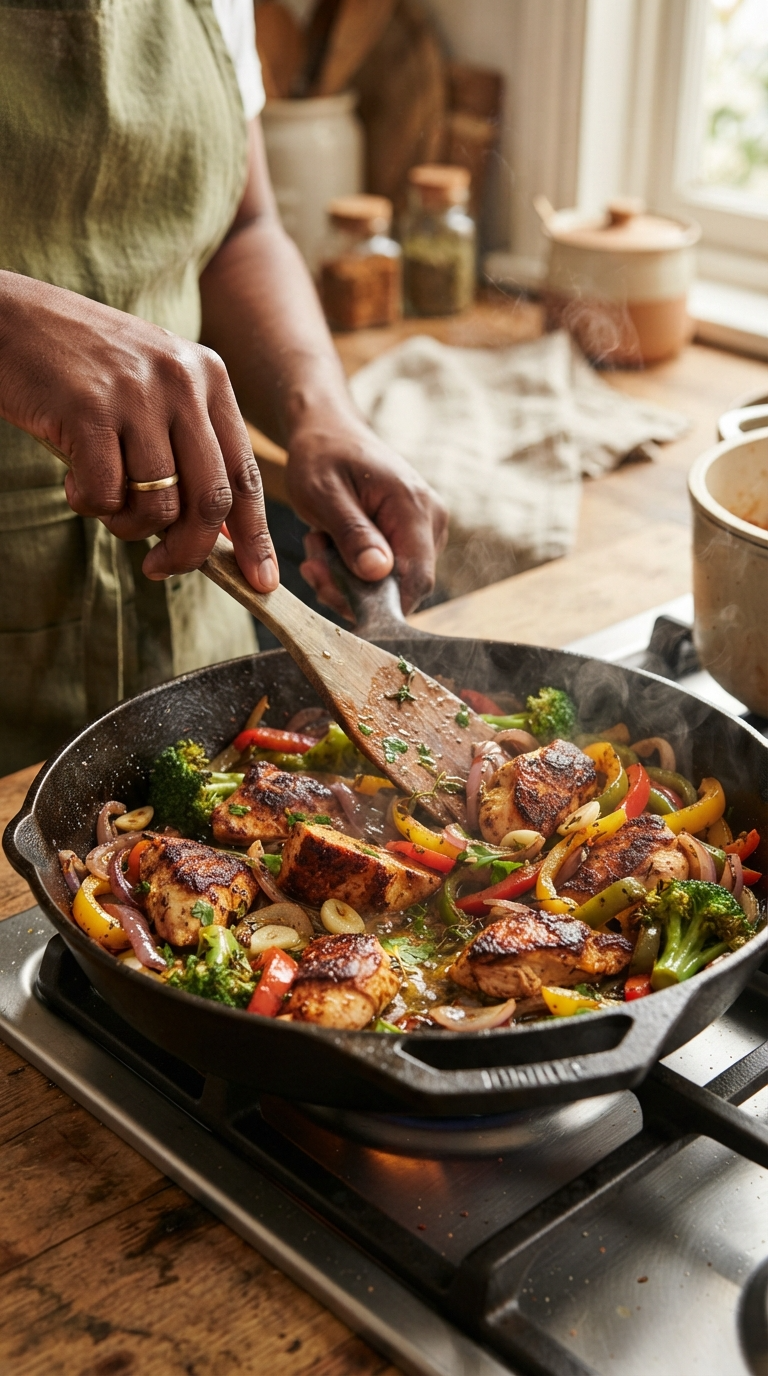
A cast iron skillet works wonderfully here, but a stainless-steel or nonstick skillet also does the job.
4. Sear the Chicken
Add the chicken in a single layer.
Cook chicken breasts for about 4–6 minutes per side, depending on thickness. Cook bite-size pieces for about 5–7 minutes total, stirring occasionally.
Look for a deep golden-brown surface rather than pale, steamed-looking chicken.
Avoid overcrowding the pan. If you’re cooking a large batch, work in two rounds. It takes a few extra minutes, but you’ll get much better browning.
Cook chicken until it reaches 165°F (74°C) internally.
5. Build a Quick Pan Sauce
Remove the cooked chicken and place it on a plate.
Reduce the heat to medium and add 1 tablespoon of butter.
Add the minced garlic and cook for about 30 seconds, just until fragrant.
Pour in ½ cup chicken broth, then add the soy sauce, honey, Dijon mustard, and lemon juice.
Scrape the browned bits from the bottom of the skillet. Those little bits hold a surprising amount of flavor.
Let the sauce simmer for 2–4 minutes until it thickens slightly.
6. Add Vegetables
Toss in your chosen vegetables.
For broccoli and carrots, give them about 4–6 minutes. Bell peppers usually need about 3–4 minutes.
For spinach, add it during the final minute. It wilts incredibly quickly.
If the pan looks dry, add a splash of chicken broth or water.
7. Return the Chicken
Put the chicken back into the skillet.
Spoon the sauce over the chicken and let everything simmer together for 1–2 minutes.
This short finishing step lets the chicken soak up the sauce without overcooking it.
8. Turn It Into a Complete Meal
Serve the chicken and vegetables over cooked rice, pasta, mashed potatoes, quinoa, or even a thick slice of crusty bread.
When I’m particularly tired, I usually choose rice because it requires almost no thought once it’s cooked.
For a lighter dinner, serve the chicken alongside a simple green salad.
Pro Tips & Tricks
Don’t Cut Into Chicken Every Few Minutes
I understand the temptation. You want to check whether it’s done.
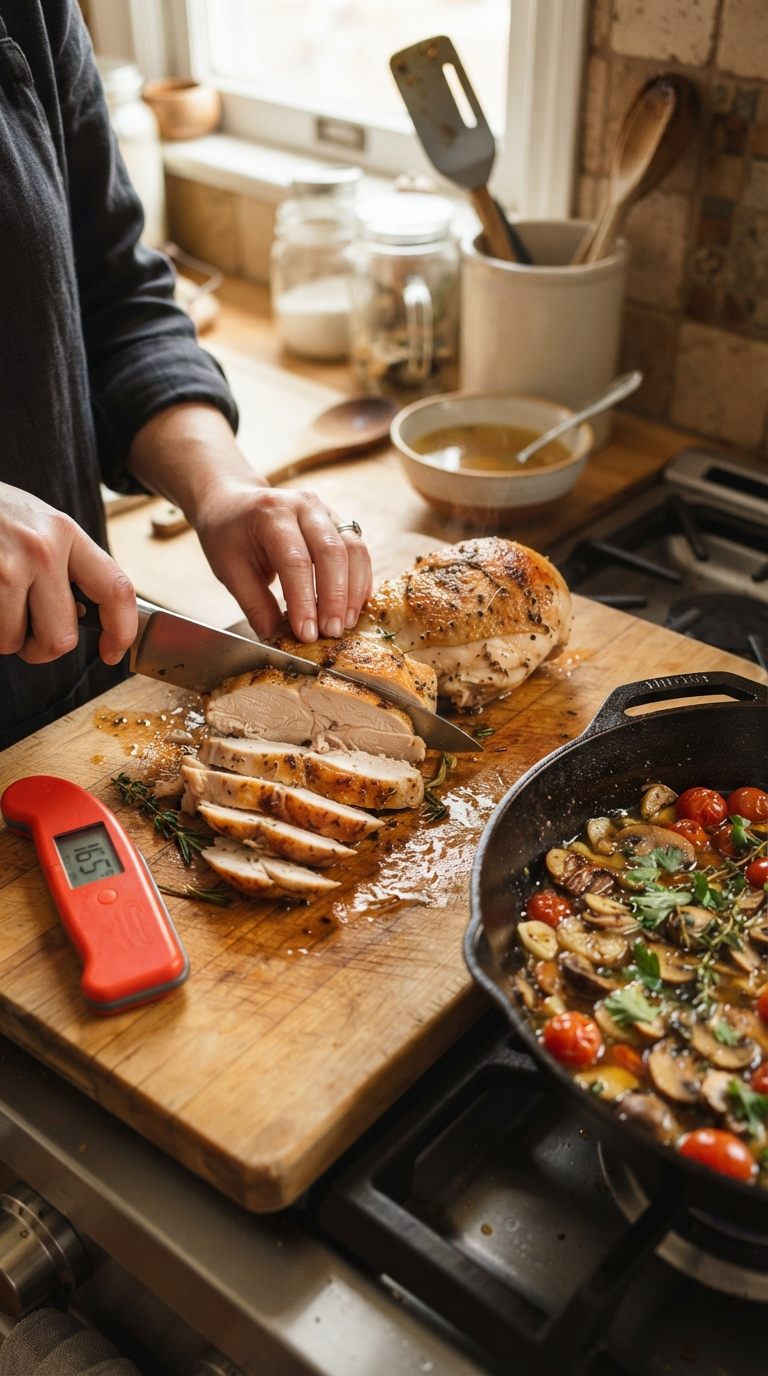
But constantly cutting chicken open lets juices escape and makes it harder to judge doneness. Use an instant-read thermometer instead.
Insert it into the thickest part of the chicken and look for 165°F (74°C).
Don’t Overcrowd the Pan
This mistake can turn beautifully browned chicken into something closer to boiled chicken.
Give each piece a little breathing room. If necessary, cook in batches.
Rest the Chicken
Let cooked chicken rest for about 5 minutes before slicing.
That short pause helps the juices settle, and it also gives you time to finish the vegetables or set the table.
Make Extra Chicken
Whenever I cook chicken for dinner, I try to make a little extra.
Leftover chicken can become tomorrow’s wrap, salad topping, sandwich filling, rice bowl, or quesadilla.
Future-you will appreciate this.
Store Leftovers Properly
Place cooled chicken in an airtight container and refrigerate it within 2 hours of cooking.
Use refrigerated cooked chicken within 3–4 days.
For longer storage, freeze portions in airtight freezer-safe containers or bags.
Reheat Gently
Chicken can become dry when reheated too aggressively.
Warm leftovers in a skillet over medium-low heat with a tablespoon or two of water or broth. Cover the pan and heat until the chicken reaches 165°F (74°C).
Variations & Substitutions
Make It Spicy
Add ½–1 teaspoon red pepper flakes to the sauce.
You can also add a spoonful of hot sauce or sliced fresh chili peppers. I especially like this version with honey because the sweetness balances the heat.
Use Chicken Thighs
Swap the chicken breasts for boneless, skinless chicken thighs.
Thighs usually tolerate slightly longer cooking without drying out, which makes them excellent for beginners.
Just remember that the thickest piece should reach 165°F (74°C).
Make It Creamy
After cooking the chicken, add ½ cup heavy cream or cooking cream to the pan sauce.
Stir in a little grated Parmesan and simmer gently until the sauce thickens.
Serve it over pasta for a comforting dinner that tastes like you spent much more time in the kitchen than you actually did.
Make It Gluten-Free
Use certified gluten-free soy sauce or tamari instead of regular soy sauce.
Also check the labels on packaged broth, seasoning blends, and other prepared ingredients if you need to avoid gluten.
Use Different Vegetables
Don’t feel tied to the vegetables listed above.
Try:
- Zucchini
- Mushrooms
- Green beans
- Snow peas
- Asparagus
- Cauliflower
- Corn
- Frozen mixed vegetables
The best weeknight recipe is often the one that helps you use what you already have.
Serving Suggestions
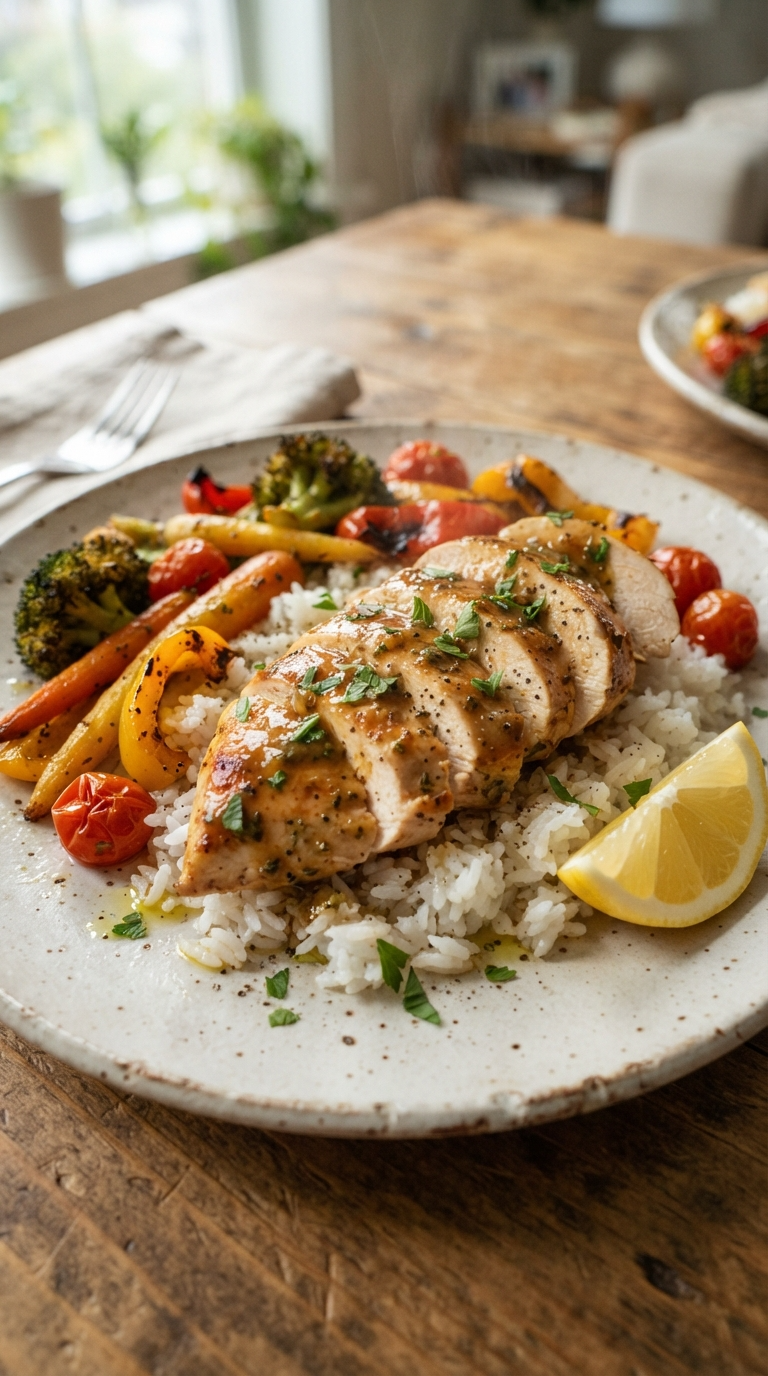
A simple chicken skillet pairs beautifully with cooked rice. Spoon the extra sauce over the top and add chopped parsley for a fresh finish.
For a cozy dinner, serve the chicken with mashed potatoes and roasted carrots.
If you want something lighter, pair it with a crisp cucumber salad, steamed broccoli, or mixed greens with lemon dressing.
For pasta night, slice the cooked chicken and toss it with pasta, the pan sauce, and a handful of Parmesan.
You can also turn the leftovers into wraps. Add sliced chicken, lettuce, tomato, cucumber, cheese, and a little yogurt-based dressing.
These meals work well for ordinary family dinners, casual weekend lunches, meal prep, or those evenings when unexpected guests appear and suddenly everyone expects you to have dinner figured out.
FAQ’s
How long does cooked chicken last in the refrigerator?
Cooked chicken generally keeps for 3–4 days in the refrigerator when stored properly in an airtight container.
Cool leftovers promptly and refrigerate them within 2 hours of cooking.
Can I prepare the chicken ahead of time?
Absolutely.
You can season the chicken several hours ahead and keep it covered in the refrigerator until you’re ready to cook.
You can also chop vegetables ahead of time and store them separately. When dinner arrives, most of the preparation has already happened.
Can I freeze cooked chicken?
Yes.
Place cooled cooked chicken in a freezer-safe airtight container or freezer bag. Remove as much excess air as possible before sealing.
For the best texture, use frozen cooked chicken within a few months.
Thaw it safely in the refrigerator before reheating.
Why does my chicken turn out dry?
The most common culprit is overcooking.
Chicken breasts have less fat than thighs, so they can dry out quickly. Use an instant-read thermometer and remove the chicken from the heat once it reaches 165°F (74°C).
Pounding thick breasts to an even thickness also helps tremendously.
Can I use frozen chicken?
You can, but don’t cook frozen chicken in a way that leaves the center undercooked while the outside becomes overdone.
For these quick recipes, I prefer thawing chicken safely in the refrigerator first. If you forget to thaw it, use a safe cooking method designed for frozen chicken and allow extra cooking time.
What can I use instead of chicken breast?
Boneless, skinless chicken thighs make an excellent substitute.
You can also use tenderloins or leftover cooked chicken. Adjust the cooking time according to the size and cut of the meat.
Closing / Final Thoughts
The best easy chicken recipes for busy weeknights don’t need complicated sauces, a long ingredient list, or a spotless kitchen.
They just need a few dependable ingredients and a cooking method you can trust.
After making these kinds of chicken dinners again and again, I’ve learned that simple food can still feel special. Give the chicken a good sear, build flavor in the same pan, add whatever vegetables need using, and don’t overthink dinner.
And if your first attempt doesn’t look perfect? That’s okay. Mine certainly didn’t.
Some of my favorite recipes started with me standing in the kitchen thinking, “Well, I have chicken, a few vegetables, and absolutely no plan.”
Sometimes, that’s exactly how the good dinners happen.