
There are nights when I want a proper homemade dinner, but I absolutely do not want to look at a sink full of dishes afterward. That is exactly how my love affair with one pan chicken dinner recipes started.
One evening, I had chicken breasts in the fridge, a few vegetables that needed using, and about zero patience for cooking three separate things. I tossed everything into my biggest skillet, seasoned it generously, and hoped for the best.
The result surprised me. The chicken came out juicy, the vegetables picked up all those savory pan juices, and the kitchen smelled like I had worked much harder than I actually did.
I have made versions of this dinner countless times since then. I have also learned a few lessons the hard way—like overcrowding the pan, cutting vegetables too large, and thinking chicken will magically stay juicy if I simply cook it forever. Spoiler: it will not.
The beauty of these one pan chicken dinner recipes comes from keeping things simple. You can build a complete meal with chicken, vegetables, potatoes, rice, or pasta, then let one skillet or sheet pan do most of the work.
And when dinner ends with only one pan to wash? That feels like winning.
Why You’ll Love These One Pan Chicken Dinner Recipes
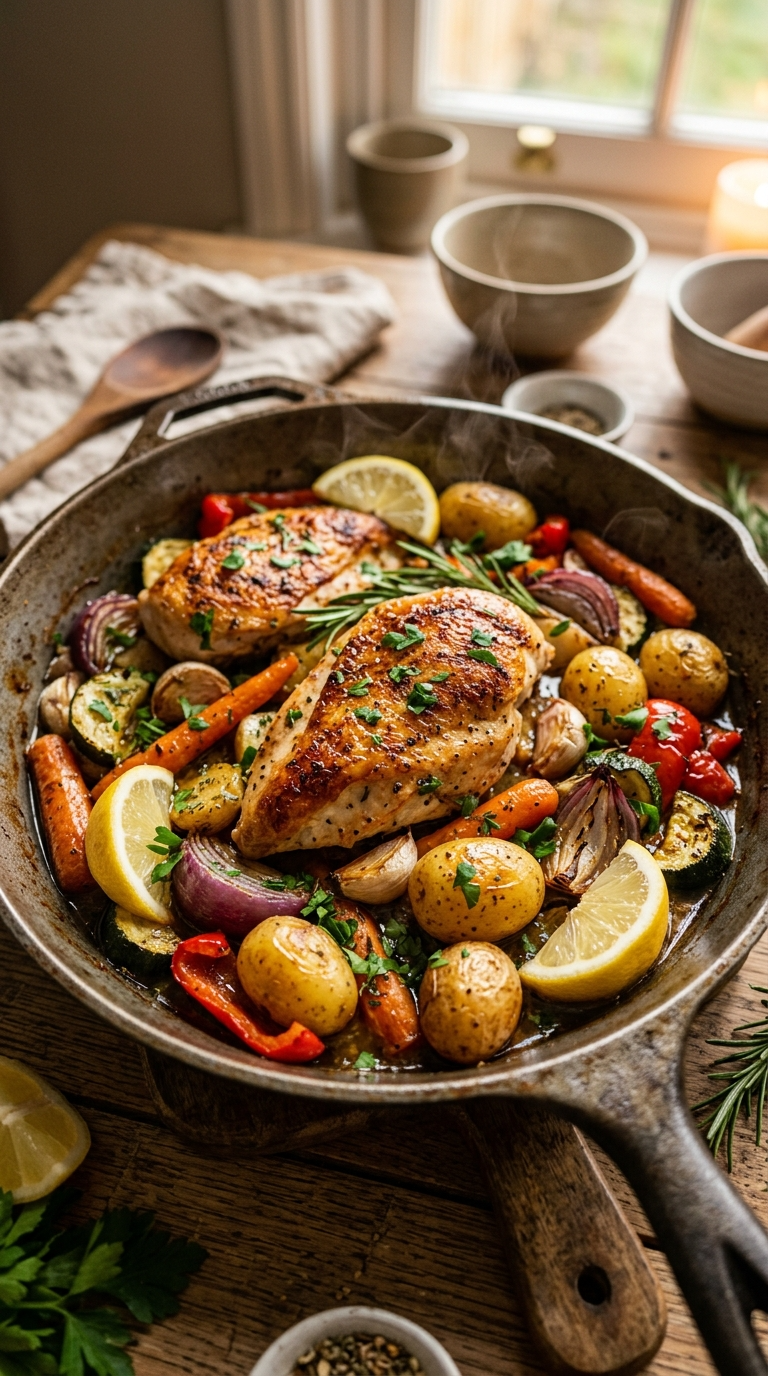
- Minimal cleanup: One pan handles the main cooking, so your sink stays manageable.
- Simple ingredients: You can build delicious meals from everyday chicken, vegetables, potatoes, and pantry seasonings.
- Beginner-friendly: You do not need complicated cooking techniques to make these dinners work.
- Easy to customize: Swap vegetables, change seasonings, or use chicken thighs instead of breasts.
- Perfect for busy evenings: Prep everything, cook it together, and get dinner on the table without juggling several pots.
My favorite part? These recipes leave plenty of room for improvising. If you have half a zucchini hiding in the fridge, use it. If your potatoes look like they have been waiting patiently for their moment, give them one.
Ingredients List
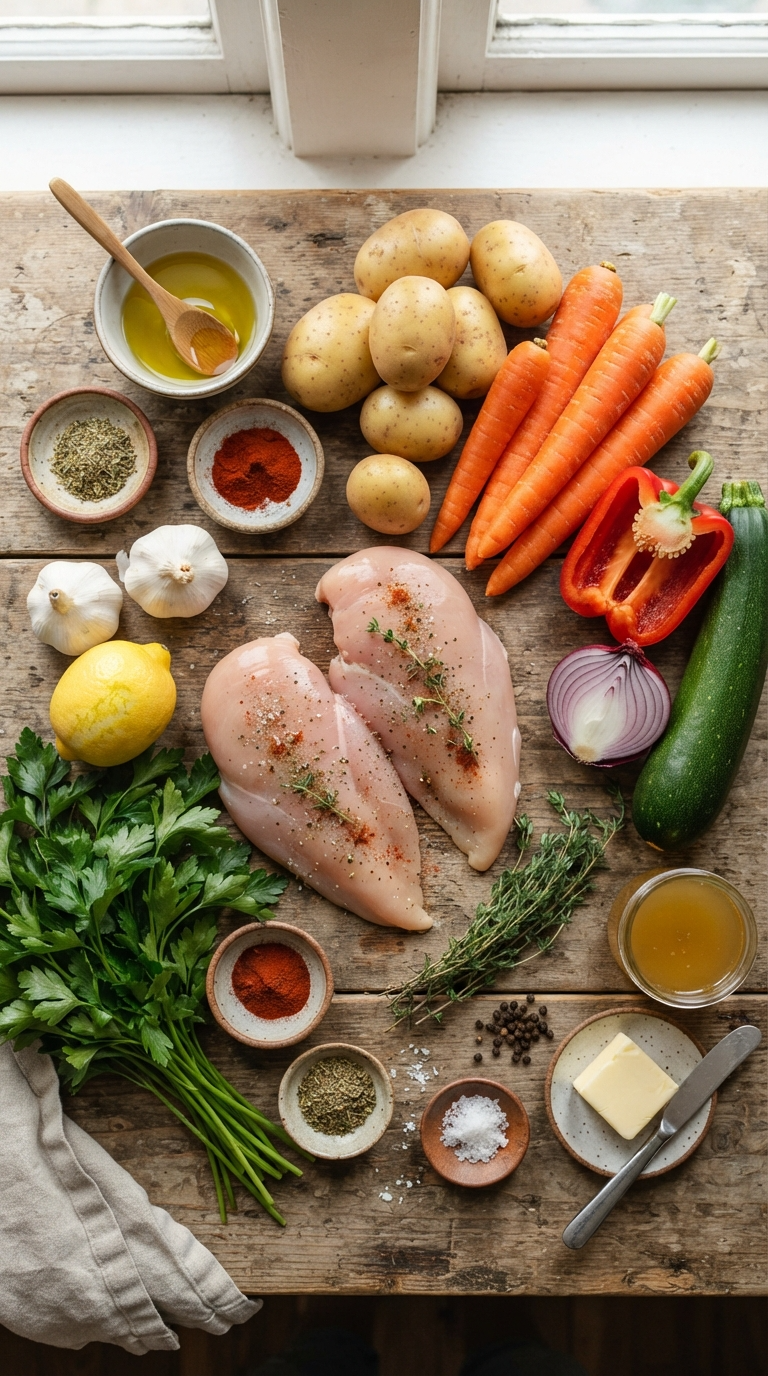
For a simple one-pan chicken dinner that feeds about 4 people, I usually reach for the following:
For the Chicken
- 1 ½ pounds boneless, skinless chicken breasts
- 2 tablespoons olive oil
- 1 teaspoon kosher salt
- ½ teaspoon black pepper
- 1 teaspoon paprika
- 1 teaspoon garlic powder
- ½ teaspoon dried oregano
- ½ teaspoon dried thyme
- ½ teaspoon onion powder
- 1 tablespoon fresh lemon juice
You can substitute boneless, skinless chicken thighs for the breasts. Thighs contain more fat, so they stay especially juicy during longer cooking.
For the Vegetables
- 1 pound baby potatoes, halved
- 2 medium carrots, sliced into ½-inch pieces
- 1 red bell pepper, cut into chunks
- 1 small zucchini, sliced into thick half-moons
- 1 small red onion, cut into wedges
- 4 garlic cloves, minced
Feel free to swap vegetables according to what you have available. Broccoli, green beans, mushrooms, cauliflower, and cherry tomatoes all work beautifully.
For Extra Flavor
- ½ cup low-sodium chicken broth
- 1 tablespoon butter
- 1 tablespoon chopped fresh parsley
- ½ lemon, sliced into wedges
If you use regular chicken broth instead of low-sodium broth, reduce the added salt slightly.
Helpful Kitchen Tools
A 12-inch cast iron skillet, large oven-safe skillet, or sturdy stainless-steel pan works well.
For sheet-pan versions, use a large rimmed baking sheet. I like lining it with parchment paper when I want cleanup to be especially painless.
An instant-read thermometer also helps remove the guesswork from cooking chicken.
Step-by-Step Instructions
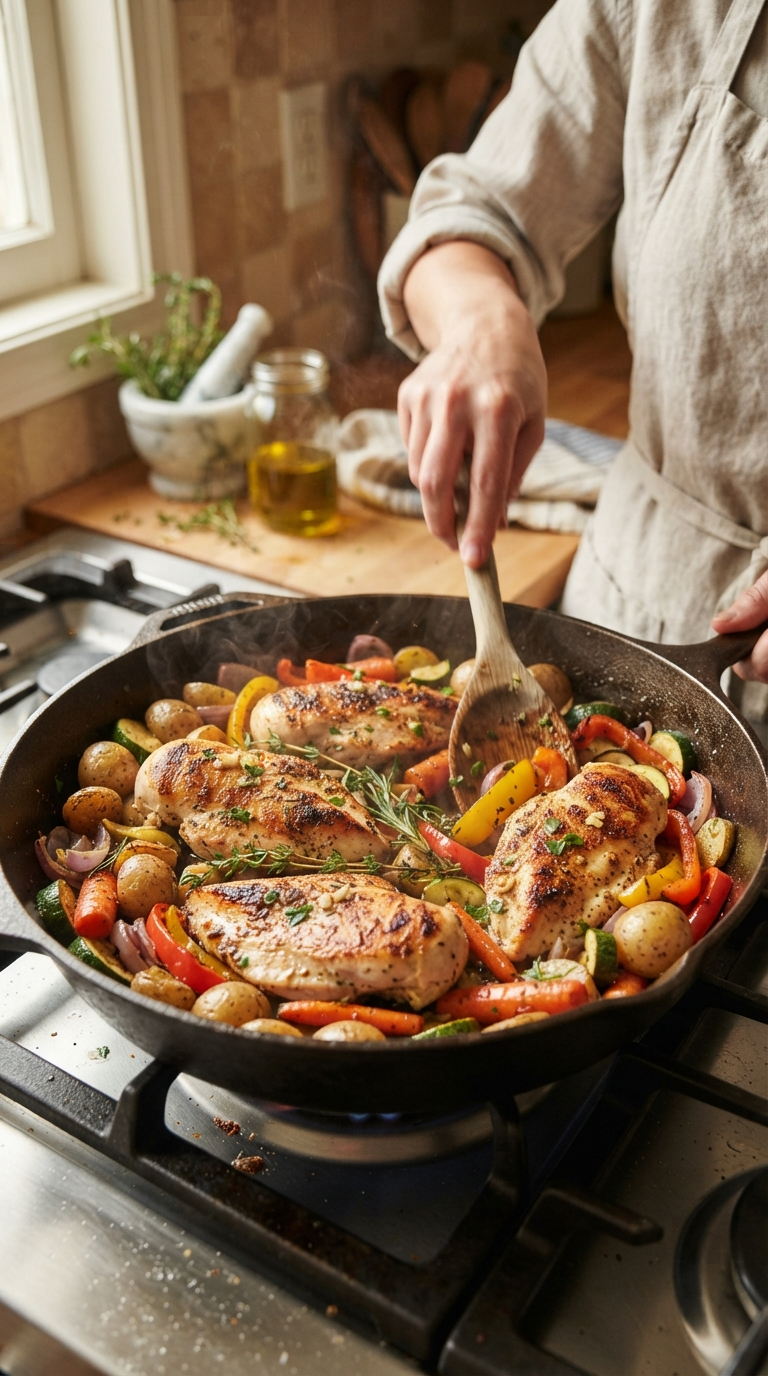
1. Prepare the Chicken — 10 Minutes
Pat the chicken breasts dry with paper towels.
This small step makes a bigger difference than you might expect. Dry chicken browns better, while excess moisture can make it steam instead.
If the chicken breasts vary greatly in thickness, gently pound the thicker portions until the pieces have a more even thickness.
Rub the chicken with olive oil.
Mix the salt, pepper, paprika, garlic powder, oregano, thyme, and onion powder in a small bowl. Sprinkle the mixture evenly over both sides of the chicken.
Finish with lemon juice.
Let the chicken sit while you prepare the vegetables. Even five minutes gives the seasoning a chance to settle into the surface.
2. Heat the Pan — 3 to 4 Minutes
Place your large oven-safe skillet over medium-high heat.
Add about 1 tablespoon of olive oil and let it heat for a minute or two.
You want the pan hot enough to create a gentle sizzle when the chicken touches it.
Do not rush this part, but also do not let the oil smoke heavily.
3. Brown the Chicken — 4 to 6 Minutes
Place the seasoned chicken into the hot skillet.
Cook for about 2–3 minutes per side, just until the outside develops a golden-brown crust.
The chicken does not need to cook completely at this stage.
Remove it to a plate.
I used to skip this step when I wanted a quicker dinner. Then I discovered how much flavor that browned surface adds to the final dish. Now I rarely skip it.
4. Cook the Potatoes and Carrots — 8 to 10 Minutes
Add the remaining tablespoon of olive oil to the same skillet.
Add the potatoes and carrots.
Cook for about 8–10 minutes, stirring occasionally.
You want the potatoes to develop a little color around the edges. They will not become fully tender yet.
If the vegetables stick slightly, do not panic. Those browned bits on the bottom of the pan contain a surprising amount of flavor.
5. Add the Remaining Vegetables — 3 Minutes
Add the red bell pepper, zucchini, red onion, and minced garlic.
Stir everything together.
Cook for another 2–3 minutes.
Do not cook the zucchini until completely soft at this point. It will continue cooking in the oven.
The garlic should smell fragrant, but it should not turn dark brown.
6. Add the Broth and Butter — 2 Minutes
Pour the chicken broth into the skillet.
Use a wooden spoon or silicone spatula to gently scrape the browned bits from the bottom.
Add the butter and stir until it melts into the broth.
This creates a quick pan sauce without requiring a separate saucepan.
Taste the liquid carefully and adjust the seasoning if necessary.
7. Return the Chicken to the Pan — 1 Minute
Nestle the browned chicken breasts among the vegetables.
Spoon a little of the pan liquid over each piece.
Arrange lemon slices around the chicken.
At this point, the skillet should look colorful and very promising. You have officially reached the stage where dinner starts smelling much better than your effort level suggests.
8. Finish in the Oven — 15 to 20 Minutes
Transfer the skillet to a preheated 400°F oven.
Bake for approximately 15–20 minutes, depending on the thickness of your chicken and the size of your vegetables.
Check the thickest part of the chicken with an instant-read thermometer.
The chicken should reach 165°F in the center.
The potatoes should feel tender when pierced with a fork, and the vegetables should have lightly browned edges.
9. Rest the Chicken — 5 Minutes
Remove the skillet from the oven.
Let the chicken rest for about 5 minutes before slicing.
I know. You are hungry.
But this little pause helps the chicken retain more of its juices instead of sending them all onto your cutting board.
Sprinkle fresh parsley over everything before serving.
Pro Tips & Tricks
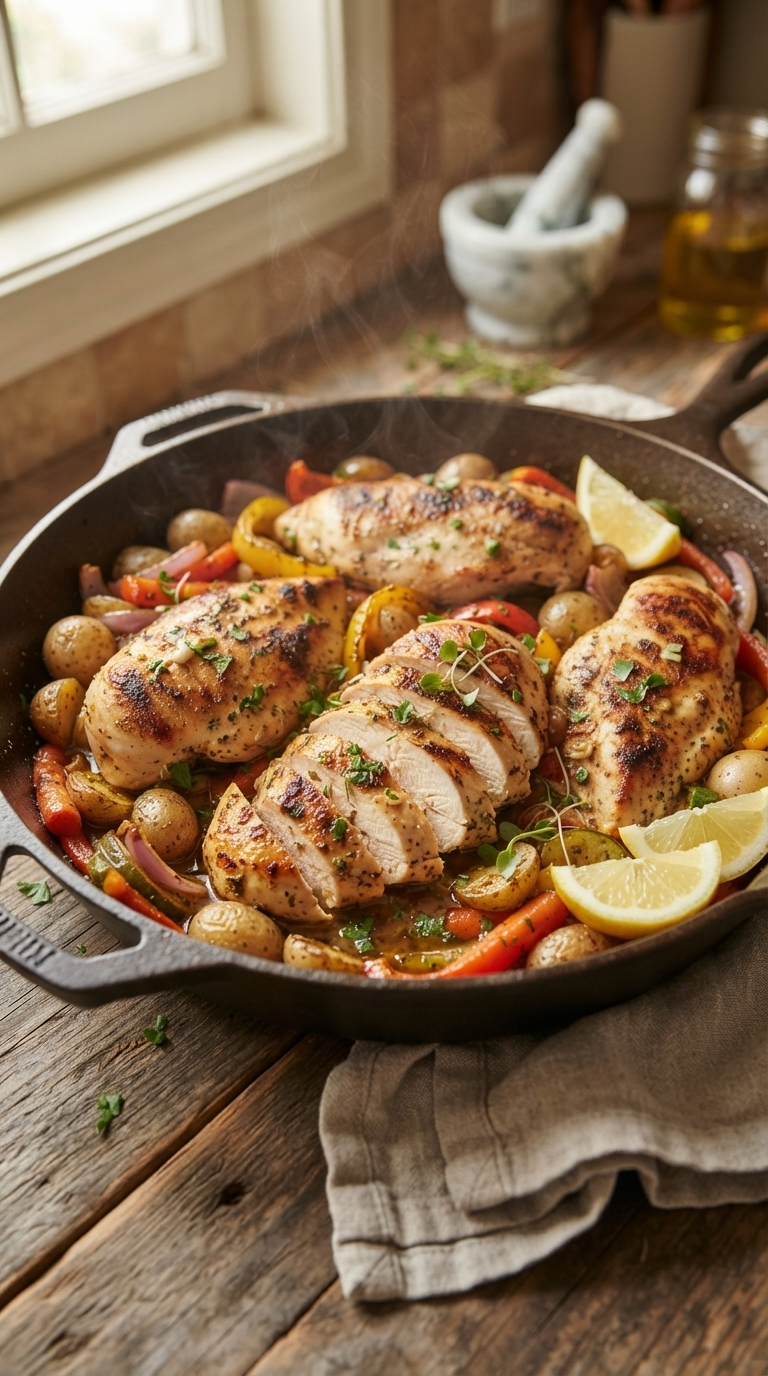
Don’t Crowd the Pan
This might be the biggest lesson I learned from making one-pan dinners.
If you cram too many ingredients into a small pan, everything releases moisture and starts steaming instead of browning.
Use your largest skillet or sheet pan. Give the ingredients some breathing room.
Cut Dense Vegetables Smaller
Potatoes and carrots take longer to cook than zucchini or bell peppers.
Cut potatoes into roughly 1-inch pieces and carrots into thin slices. Keep softer vegetables slightly larger so they do not turn mushy.
Pat the Chicken Dry
A quick pat with paper towels helps the chicken brown properly.
Wet chicken tends to sit in moisture instead of developing that tasty golden exterior.
Don’t Overcook Chicken Breasts
Chicken breasts contain less fat than thighs, so they can dry out quickly.
Use an instant-read thermometer instead of relying entirely on cooking time. Thickness, pan size, and oven temperature can all affect how quickly chicken cooks.
Store Leftovers Properly
Let leftovers cool before placing them in an airtight container.
Refrigerate them for up to 3–4 days.
For make-ahead dinners, you can chop the vegetables and season the chicken earlier in the day. Store them separately in the refrigerator until you’re ready to cook.
Reheat Gently
Reheat leftovers in a covered skillet over medium-low heat with a small splash of chicken broth.
You can also use the microwave, but cover the chicken with a damp paper towel and heat it in short intervals to help prevent it from becoming rubbery.
Variations & Substitutions
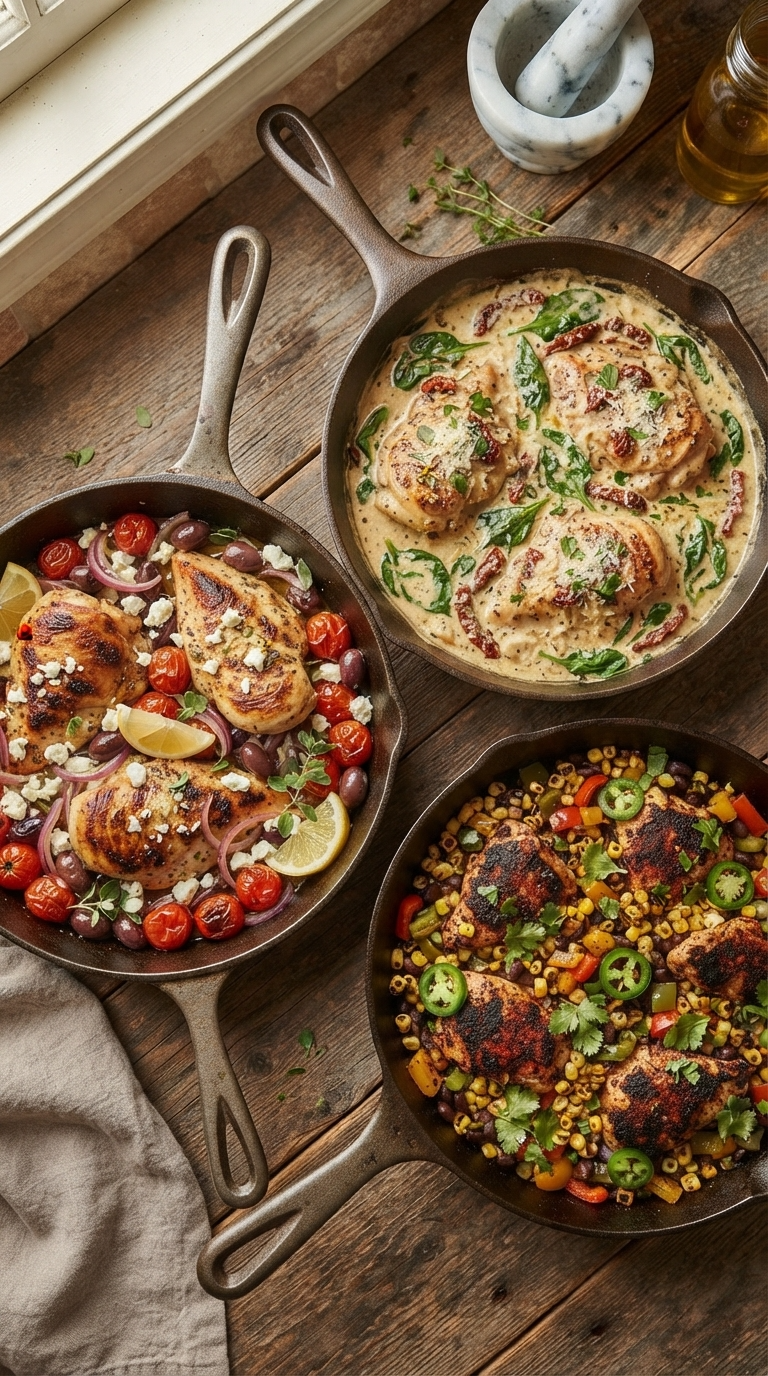
One reason I keep coming back to one pan chicken dinners is that the basic formula never gets boring.
Creamy Garlic Chicken
After cooking the chicken and vegetables, add ½ cup heavy cream along with the broth.
Stir in a handful of grated Parmesan and let the sauce gently simmer until slightly thickened.
Add spinach during the final few minutes for a creamy skillet dinner that feels wonderfully cozy.
Spicy Southwest Chicken
Replace the oregano and thyme with:
- 1 teaspoon chili powder
- ½ teaspoon ground cumin
- ½ teaspoon smoked paprika
- ¼ teaspoon cayenne pepper
Add black beans and corn during the final cooking stage.
Serve with lime wedges, avocado, or a spoonful of sour cream.
Mediterranean-Style Chicken
Use chicken thighs instead of breasts and add:
- Cherry tomatoes
- Kalamata olives
- Red onion
- Bell peppers
- Dried oregano
- Lemon slices
Finish with crumbled feta and fresh parsley after cooking.
The bright lemon and salty feta make this version one of my favorite ways to change up the basic recipe.
Easy Dairy-Free Version
Simply leave out the butter and use additional olive oil.
You can also check your chicken broth label if you need to avoid dairy ingredients.
Gluten-Free Option
The basic chicken, vegetable, broth, and seasoning combination can work well for a gluten-free dinner.
Check packaged ingredients such as broth and seasoning blends to make sure they fit your needs.
Serving Suggestions
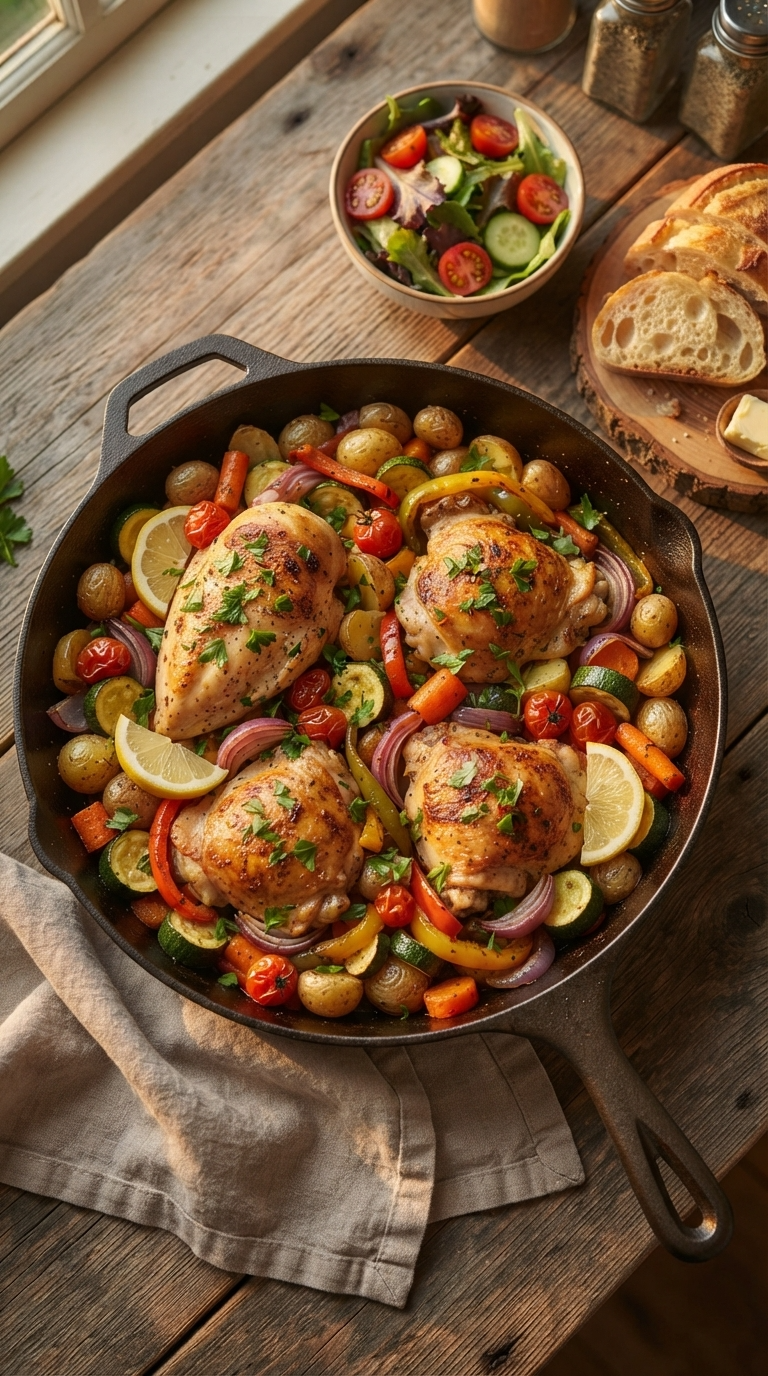
These one pan chicken dinner recipes already include protein and vegetables, so you do not need to build a complicated menu around them.
For a heartier dinner, serve the chicken with:
- Warm crusty bread
- Steamed rice
- Quinoa
- Buttered noodles
- A simple green salad
- Garlic bread
- Extra roasted vegetables
For a casual family dinner, I usually put the whole skillet in the middle of the table and let everyone serve themselves.
For guests, transfer the chicken and vegetables to a large serving platter and spoon the pan juices over everything.
A little chopped parsley and a few lemon wedges make the whole thing look much more impressive.
For meal prep, divide the cooled chicken and vegetables into four airtight containers. Add rice or another grain if you want a more filling lunch.
FAQ’s
Can I use chicken thighs instead of chicken breasts?
Absolutely. Boneless, skinless chicken thighs work particularly well because they contain more fat and stay juicy.
You may need to adjust the cooking time depending on the size of the thighs. Always check the thickest piece with an instant-read thermometer.
Can I make one pan chicken dinner ahead of time?
Yes. You can chop the vegetables and season the chicken several hours ahead.
Keep everything refrigerated in separate covered containers until you’re ready to cook.
For the best texture, cook the meal as close to serving time as practical.
Can I freeze leftover one pan chicken?
Yes, although the texture of some vegetables may change slightly after freezing.
Cool the chicken completely, remove it from the bones if you used bone-in pieces, and store it in a freezer-safe airtight container for up to about 2–3 months for best quality.
Thaw overnight in the refrigerator before reheating.
Why did my chicken turn out dry?
The most common reason involves overcooking.
Chicken breast dries out quickly once it goes well beyond the safe internal temperature. Check the thickest part with a thermometer rather than relying only on the recipe’s cooking time.
Unevenly sized chicken breasts can also cause thinner pieces to finish much earlier than thicker ones.
Why are my potatoes still hard?
Your potato pieces may be too large, or your pan may not have enough heat.
Cut potatoes into smaller, similarly sized pieces. You can also give them a head start in the skillet before adding softer vegetables.
Can I make this recipe on the stovetop instead of using the oven?
Yes.
After browning the chicken and vegetables, reduce the heat to medium-low, cover the skillet, and continue cooking until the chicken reaches 165°F and the potatoes become tender.
Add a splash more broth if the pan becomes dry.
A heavy cast iron skillet works especially well for this method because it holds heat steadily.
Closing / Final Thoughts
The thing I love most about one pan chicken dinner recipes isn’t just the easy cleanup.
It is the feeling of putting a real dinner on the table without turning the kitchen into a disaster zone.
After making these meals so many times, I have learned that you do not need twenty ingredients or a complicated sauce to make chicken taste fantastic. A hot pan, good seasoning, properly cooked chicken, and a handful of vegetables can do plenty of heavy lifting.
And please don’t be afraid to make this recipe your own. Use the vegetables sitting in your fridge. Swap chicken breasts for thighs. Add some heat if that’s your thing. Throw in a handful of cherry tomatoes because they need rescuing.
That is how some of my favorite dinners happened in the first place.
So grab your biggest pan, turn on the oven, and give yourself permission to keep dinner simple. Your future self—especially the version standing in front of the sink afterward—will thank you.